Skip to content
Healthaware

Healthaware

Health is Wealth

  • Home

Tag: Cleveland Clinic

Posted on August 18, 2025

Recipe: Salmon Marsala @ClevelandClinic

This recipe switches up chicken marsala by swapping in salmon. It’s a great way to get delicious and healthy fish on the menu. You should be able to find Marsala wine in the cooking wines or condiments section of your local grocery store.

Ingredients

  • 1 tablespoon olive oil
  • 1 onion, cut into wedges
  • 1 teaspoon minced garlic
  • 10 fresh mushrooms, sliced (or one 7-ounce can of sliced mushrooms, drained)
  • 4 (4 ounces each) skinless salmon filets
  • 1/3 cup Marsala wine
  • 2/3 cup chicken broth (1/3 less sodium)
  • 1/4 teaspoon salt (optional)
  • 4 teaspoons cornstarch
  • 4 grinds of fresh ground pepper

Directions

  1. Prep the onions and mushrooms.
  2. Heat oil in nonstick skillet over medium-high heat; add onion, garlic and mushrooms to the skillet and begin sautéing.
  3. Add the salmon filets to the skillet, cooking for 10 minutes per inch of thickness (turn them over midway in the cooking time).
  4. Mix together the wine, broth, cornstarch and fresh ground pepper; when the fish is nearly done (you can tell by twisting the center of the thickest part — if it flakes easily, it’s done), add the wine/broth mixture to the salmon.
  5. Stir gently, as the liquid turns into a thick gravy within one minute. Serve over whole-grain pasta or brown rice, with steamed asparagus or vegetable of your choice.

Ingredient health benefits

  • Olive oil: Olive oil is one of those ingredients that’s actually worth the hoopla. It has fat-soluble vitamins like vitamins D and K, which support your bones and blood cells. It’s also home to unsaturated fats that help decrease your LDL (“bad”) cholesterol and increase your HDL (“good”) cholesterol, helping your heart stay happy. And if you need another reason to use olive oil beyond this recipe, it has polyphenols and other antioxidants to fight inflammation and free radicals, keeping your cells in peak condition and helping to prevent diseases down the road.
  • Onions: They may not be the most “a-peel-ing” ingredient in the produce aisle, but looks can be deceiving. Onions have prebiotics and fiber to feed your “good” gut bacteria and support healthy digestion. And that’s not all those layers have to offer! There are also vitamin C and flavonoids that help lower inflammation while boosting your immunity.
  • Garlic: Like onions, these alliums aren’t the most exciting of foods. But “unremarkable” doesn’t mean “devoid of nutrition.” On the contrary, garlic is considered a superfood! Aside from keeping vampires away, eating garlic may strengthen your immunity as part of a well-balanced eating plan. It might also help regulate your blood pressure, and certain natural compounds in garlic can lower inflammation and protect your cells from damage.
  • Mushrooms: They may not be plants or animals, but mushrooms are just as nutritious! They’re packed with antioxidants like selenium and zinc that promote healing and may enhance your immune cells’ ability to fight diseases like cancer. Mushrooms are also a surprising source of B vitamins — like vitamins B3,B5 and B6 — which are crucial for creating and fixing DNA, as well as helping your body turn the food you eat into usable energy. Even your heart can benefit from the potassium found in these fantastic fungi, which helps regulate your blood pressure and keep the beat.
  • Salmon: Not just for the bears! This hearty fish is a complete protein that’s pescatarian-friendly, meaning it has all the amino acids your body needs to keep moving. Salmon is also low in mercury content and high in omega-3s, heart-helpful fats that are essential for your head-to-toe health. And that’s not all for omega-3s! They also double as an anti-inflammatory that promotes your immune system.

Nutrition information (per serving)

Makes 4 servings

Calories: 450
Fat: 12 g
Fiber: 9 g
Sodium: 147 mg (doesn’t include the optional salt)
Carbohydrates: 44 g
Protein: 37 g

— Recipe courtesy of Speaking of Women’s Health.

Posted on August 17, 2025

Alcohol heightens the risk of dehydration @ClevelandClinic #sugarysweeteners


Cleveland Clinic

@ClevelandClinic
·
5h

What to know before grabbing an ice-cold beer to beat the heat:

It’s a warm summer day and you’re hanging out with friends and family for the first time in over a year, celebrating being vaccinated and just being together. And to help beat the heat, you reach in the cooler for an ice-cold beer.

While that might be refreshing at the moment, though, there’s good reason to grab some water, too. The heat of summer can be brutal, sometimes, and its effects are amplified when you’ve had a little too much alcohol.

To better understand the risks you face when drinking alcohol during this hot vaccine summer, we spoke with registered dietitian Julia Zumpano, RD.

The biggest danger: dehydration

Whenever you’re outside in the heat for prolonged periods – like at the beach or picnic – you’re at risk of dehydration. Consuming alcohol only heightens that risk.

Alcohol reduces the release of the hormone vasopressin, which keeps your body fluids balanced. At the same time, alcohol is also a diuretic which means more urinating and that can lead to dehydration even without the heat. Add in all that sweat from the hot sun and it’s a recipe for dehydration disaster.

One thing Zumprano points out, too, is that caffeine – whether via coffee, soda or as a mixer for liquor – heightens that dehydration risk even further.

Dehydration can also compound certain aspects of intoxication, she notes. “Altered thinking, altered abilities to drive and make reasonable decisions or even just to have conversations are all things that intoxication can cause.”

Liquor versus beer: Is one worse than the other in the heat?

Given that alcohol content is usually higher in spirits than in your average beer, it makes sense that drinking beer instead of mixed drinks might help you avoid dehydration. But the reality is a little more complex, according to Zumpano.

“If you’re consuming liquor at a volume equivalent to the volume of beer, like 12 ounces of margaritas compared to 12 ounces of an average beer, you will get drunk a lot quicker,” she says. “But if you’re drinking what’s considered an alcoholic drink equivalent, there’s not much of a difference because your alcohol intake is the same.”

According to the National Institute of Health, one alcoholic drink equivalent, also referred to as a “standard drink,” contains around 14 grams of pure alcohol. By those measurements, an average 12-ounce can of beer contains the same amount of alcohol as a 5-ounce glass of wine or a typical shot of distilled spirits like rum, vodka, gin or whiskey.

One thing to keep an eye on, though, is the alcoholic content of your beer. While major brands generally run between 4% and 5% alcohol per 12-ounce can or bottle, certain styles of craft beer are as much as 9% alcohol per the same volume. In other words, one can of your favorite local IPA delivers almost twice the amount of alcohol to your system. 

Beware a false sense of hydration

Another mistake you should avoid, Zumpano says, is thinking that drinking all that liquid rehydrates you. “If you’re drinking a lot of beer or alcoholic seltzer, it can feel like you’re drinking a lot of liquid and staying hydrated, but the alcohol offsets that because it’s the dehydrating factor,” she points out.

Not that drinking mixed drinks is any better, according to Zumpano. “If you’re drinking a sugary, sweet mixed drink, you run into the same thing. It feels like you’re staying hydrated because they go down so much smoother than drinking spirits on the rocks. But it’s the same effect as with beer: The alcohol is still dehydrating you unless you’re also drinking enough water.”

Sugar, the hidden villain

All of these drinks have other adverse health effects, too. They can pack a bunch of calories into a single serving – as many as 400 to 500 calories in some mixed drinks and craft beers – and they can come loaded with carbs.

There’s more, though. “If you’re drinking high sugar, high caloric intake beverages and you’re drinking a lot of them, they can be very filling,” Zumpano says. If you’re feeling full, you might not eat any food which can otherwise help absorb some of the alcohol.

How to counter dehydration: water, water, water

So what can you do to avoid dehydration troubles when you’re sipping your favorite boozy beverage by the pool? “To counteract the dehydration risk of alcohol,” Zumpano says, “drink 8 to 12 ounces of water for every alcoholic drink. It slows your intake, keeps you hydrated and can mitigate negative hangover effects.”

She suggests keeping a reusable water bottle with you that you can refill as the day goes on, taking time to drink the necessary water between beers or margaritas. Another option is to buy a pack of 8-ounce bottles of water and alternate with your booze. And you can always infuse your water with fruit to keep it flavorful.

“It’s also important to know what your trigger for over-consumption is,” she adds. “If you’re triggered by over-consuming beer or alcoholic seltzer, you want to be mindful of that. Try to switch a drink you have better control of and keep the water bottle handy.”

Posted on August 14, 2025

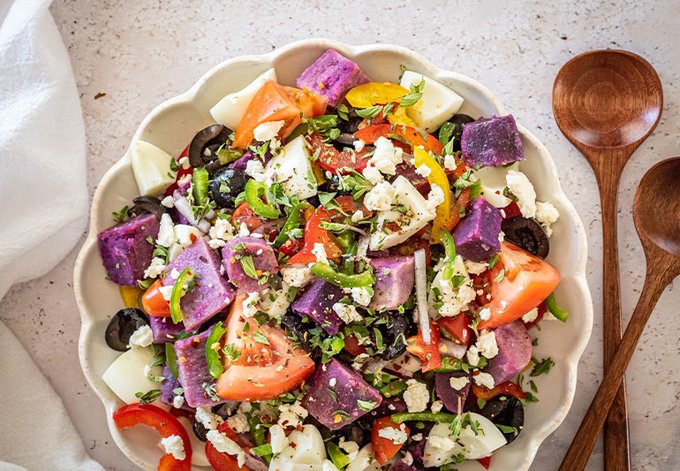
Recipe: Peruvian Blue Potato Salad @ClevelandClinic

Peru has been cultivating potatoes for more than 6,000 years in the high Andean slopes near Lake Titicaca.

A stroll through the public markets reveals a startling number of sizes, shapes and colors — including the famous Peruvian blue potatoes with their purplish-blue skin and flesh.

It’s fun to use these blue potatoes, but if your market doesn’t carry them or if you prefer other potatoes, you can always use small red or white potatoes.

Ingredients

Kosher salt
1 1/4 pounds small Peruvian blue potatoes
1/4 cup minced red onions
1 red bell pepper, seeded and diced
1 yellow bell pepper, seeded and diced
1 large tomato, seeded and chopped
1 jalepeño, seeded and minced
3 tablespoons red wine vinegar
3 tablespoons extra virgin olive oil
1 teaspoon sugar substitute
2 hard-boiled egg whites, chopped
2 tablespoons chopped fresh oregano
1/2 cup crumbled reduced-fat feta cheese
2 tablespoons sliced black olives, optional

Directions

  1. Bring a pot of lightly salted water to a boil. Simmer the potatoes until cooked through, 15 to 20 minutes, depending on size. Drain and cool. Quarter or slice into bite-sized pieces and place in a bowl.
  2. Combine the potatoes and the onion, bell peppers, tomato, jalepeño, vinegar, oil, 1/4 teaspoon salt (if using), sugar substitute, egg whites, oregano and cheese. Refrigerate until ready to serve. Garnish with olives, if using.

Nutritional information (per serving)

Makes 8 servings

Calories: 200 calories (31% from fat)
Total fat: 7 g
Saturated fat: 1.5 g
Protein: 7 g
Carbohydrate: 31 g
Dietary fiber: 2 g
Cholesterol: 5 mg
Sodium: 95 mg
Potassium: 109 mg

Source: Cleveland Clinic Healthy Heart Lifestyle Guide and Cookbook (© 2007 Broadway Books).

Posted on August 13, 2025

Recipe: Caramelized Pineapple With Raspberries @ClevelandClinic


Cleveland Clinic

@ClevelandClinic
·
28m

This is a last-minute dessert that can be made post-dinner, while you brew the coffee and finish clearing the table

health.clevelandclinic.org
Recipe: Caramelized Pineapple With Raspberries
A refined, refreshing and quick dessert that will impress your guests

This is a last-minute dessert that can be made post-dinner, while you brew the coffee and finish clearing the table. Have ingredients and equipment ready beforehand — just be sure to turn the pineapple once and give the skillet a couple of shakes and voila! You’ll have a delightfully sweet dessert ready at your fingertips.

Ingredients

1/4 cup sugar
1/4 cup sugar substitute
1 pineapple, peeled, cored and sliced into six wedges lengthwise
Butter-flavored cooking spray, refrigerated
1 tablespoon trans-fat free margarine
2 tablespoons Cognac or fresh orange juice
1 cup fresh raspberries

Directions

  1. Combine the sugar and sugar substitute. Sprinkle half of the mixture over one side of the pineapple. Turn and sprinkle the rest on the other side.
  2. Lightly coat a large non-stick skillet with cooking spray. Add the margarine and melt over high heat. Place the pineapple in the skillet and cook, turning once and shaking the pan often, until it turns golden brown, 10 to 15 minutes. (The pineapple can be prepared to this point and held for one hour.)
  3. Transfer the pineapple wedges to six dessert dishes, leaving the sauce that has formed in the pan.
  4. Stir the cognac into the pan to thin the sauce. Heat briefly. Drizzle the sauce over the pineapple and sprinkle with equal portions of the raspberries. Serve warm.

Nutritional information (per serving)

Makes 6 servings

Calories: 118
Total fat: 3 g
Protein: 0.1 g
Carbohydrate: 22 g
Dietary fiber: 2 g
Cholesterol: 0 mg
Sodium: 0 mg
Potassium: 122 mg

— Cleveland Clinic Healthy Heart Lifestyle Guide and Cookbook (© 2007 Broadway Books).

Posted on August 13, 2025

Recipe: Asparagus Salad With Lemon and Parmesan @ClevelandClinic

This bright, lemony salad is best made with farm-fresh asparagus, which is dressed and eaten raw here. Look for stalks that are bright green with firm, tight tips. Buy it in season from your local farmer’s market.

Ingredients

1 pound fresh asparagus
1 tablespoon fresh lemon juice
1 tablespoon extra virgin olive oil
1/8 teaspoon kosher salt
1/8 teaspoon freshly ground black pepper
1 tablespoon shaved Parmesan
8 fresh chives

Directions

  1. Break off the tough ends of the asparagus and discard.
  2. Use a vegetable peeler to make long thin ribbons of asparagus. Add to a large bowl.
  3. In a small bowl, whisk together the lemon juice, oil, salt and pepper. Drizzle over the asparagus ribbons and toss well.
  4. Use the vegetable peeler to shave thin strips from a piece of fresh Parmesan (about 1 tablespoon) and scatter over the salad.
  5. Use kitchen shears to cut the chives into small pieces directly over the salad.

Nutritional information (per serving)

Makes 4 servings

Calories: 70
Total fat: 4 g
Saturated fat: 1 g
Trans fat: 0 g
Protein: 4 g
Total carbohydrate: 7 g
Fiber: 3 g
Sugar: 2 g
Cholesterol: 0 mg
Sodium: 95 mg

— Developed by Sara Quessenberry for Cleveland Clinic Wellness.

Posted on August 5, 2025

Intuitive eating is an approach to food that focuses on identifying and trusting your hunger cues @ClevelandClinic

Intuitive eating is an approach to food that focuses on identifying and trusting your hunger cues. Studies show that it’s associated with: – Positive body image and self-esteem – Lower rates of disordered eating – Higher general well-being Intuitive eating isn’t a free-for-all —… pic.twitter.com/I7IYddV90a

— Cleveland Clinic (@ClevelandClinic) July 18, 2025
Posted on August 4, 2025

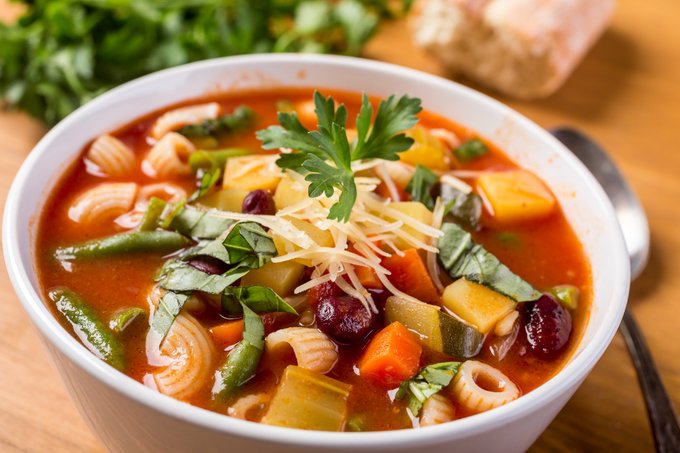
Recipe: Hearty Minestrone Soup @ClevelandClinic #heartaware


cleveland minestrone

Cleveland Clinic
@ClevelandClinic
·

9h

In honor of #SoupItForwardDay, we’re sharing our most popular soup recipe: Hearty Minestrone Soup https://cle.clinic/388EoJ4 #HugInABowl

This tasty, filling Italian soup is packed with nutrient-rich veggies, heart-healthy olive oil and fiber-friendly legumes. Enjoy it all year long — let it warm you up in the fall and winter, and fill it with fresh vegetables from your garden in the summer.

Ingredients

¼ cup olive oil
1 clove garlic, minced (or 1/8 teaspoon garlic powder)
1-1/3 cups coarsely chopped onion
1-1/2 cups coarsely chopped celery and leaves
1 can (6 ounces) tomato paste
1 tablespoon chopped fresh parsley
1 cup sliced carrots, fresh or frozen
4-3/4 cups shredded cabbage
1 can (16 ounces) tomatoes, cut up
1 cup canned red kidney beans, drained and rinsed
1-1/2 cups frozen peas
1-1/2 cups fresh green beans
Dash hot sauce
11 cups water
2 cups uncooked spaghetti noodles

Directions

  1. Heat oil in a 4-quart saucepan.
  2. Add garlic, onion and celery, and sauté about 5 minutes.
  3. Add all remaining ingredients except spaghetti, and stir until ingredients are well-mixed.
  4. Bring to a boil. Reduce heat, cover and simmer about 45 minutes or until vegetables are tender.
  5. Add uncooked spaghetti and simmer 2-3 minutes only.

Nutrition information

Makes 16 servings
Per serving:

Calories: 260
Fat: 4g
Saturated fat: 0g
Sodium: 191mg
Protein: 11g
Carbohydrate: 45g
Sugars: 7g
Dietary fiber: 8g

—Recipe courtesy of Stay Young at Heart (National Heart, Blood and Lung Institute) 


Posted on August 1, 2025

From beginner’s yoga to more advanced practices, downward dog is one of the most popular poses…with a few common misconceptions. Physical therapist Dawn Lorring, PT, MPT @ClevelandClinic

Take a ‘Paws’ With Downward Dog

This transitional and restorative yoga pose provides a full-body stretch

Physical therapist Dawn Lorring, PT, MPT, walks through the steps of how to do downward dog correctly and shares its many benefits.

From beginner’s yoga to more advanced practices, downward dog is one of the most popular poses…with a few common misconceptions.

Rounding your back, placing your feet too far apart or putting too much weight into your wrists can all create a deeper stretch than intended — which increases your risk of injury.

Physical therapist Dawn Lorring, PT, MPT, walks through the steps of how to do downward dog correctly and shares its many benefits.

What is downward dog?

Downward dog (also known as downward facing dog, facing dog pose or Adho Mukha Svanasana in Sanskrit) is a foundational yoga pose. It’s often used as a transition between movements, like sun salutations. It’s also a form of active resting, active stretching and strengthening. This allows you to check in with yourself and re-evaluate your intentions during your practice.

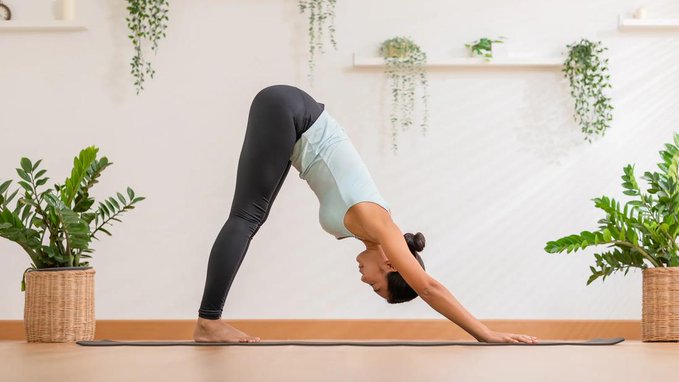
You do downward facing dog by putting your body into an inverted V-shape (or pyramid), as if there were a straight line that runs through the top of your head up your spine and out of your butt toward the ceiling.

How to properly do downward facing dog

Facing dog pose won’t usually be your first movement when doing yoga. Before trying it, it’s best to loosen up your muscles and joints and find ways to work it into your overall yoga practice.

Once you’re warmed up and ready to go, follow these steps:

  1. Start on all fours with your hands shoulder-width apart and your knees in line directly behind your hips.
  2. Spreading your fingers wide, press down into your hands and tuck your toes (almost like you’re using them to grip the floor beneath you).
  3. As you exhale, bring your hips up and back, as if there’s a string pulling your butt toward the ceiling, so your body creates an inverted V-shape (or pyramid).
  4. Focus on straightening your back, not rounding it, so your head and neck are relaxed between your upper arms. It helps to focus on pressing through your arms to “push” the ground away from you and keep your arms active.
  5. Engage your core muscles and pull your tummy in.
  6. Keep your legs straight and, if it’s comfortable for you to do so, try to drop your heels down to the floor.
  7. Adjust your posture by shifting your weight between your hands and feet until you sink comfortably into the position.
  8. Hold this pose for 10 to 15 seconds at a time, making sure to breathe throughout.
  9. For a more relaxed stretch, bend your knees a little and readjust your posture as needed.
  10. When you’re done, exhale and move into your next pose or slowly lower yourself to the floor to enter child’s pose.

“Downward facing dog isn’t about keeping your heels on the ground or holding it for long periods of time,” clarifies Lorring. “It’s really about making sure you’re going to a place that’s comfortable for you, so you can adjust your body as often as you need in this pose.”

Facing dog pose variations

If you have a hard time getting down on your hands and knees, try this wall variation:

  1. Face the wall and place both your hands out in front of you so your palms are flat and your fingers are stretched out.
  2. Keeping your head and back straight and your hands on the wall in front of you, slowly walk your legs backward.
  3. As you move, walk your hands down the wall so you hinge at your hips and look directly at the floor.
  4. Keeping your head and neck relaxed, hold this pose for 10 to 15 seconds before slowly returning to stand.
  5. If you feel stress or discomfort in your wrists, you can modify by rolling up a towel or the edge of your yoga mat and placing the roll under the heels of your hands. This will decrease some of that pressure.

For a more challenging stretch that deeply engages your hips and hamstrings:

  1. While in the downward facing dog position, lift one leg up and stretch it toward the ceiling.
  2. For a deeper stretch, bend your outstretched leg back and over your body, so your knee is facing away from you.
  3. Repeat this process with the other leg, holding the pose for as long as you feel comfortable on either side.

Downward dog benefits

Downward facing dog provides a full body stretch, while also strengthening and working your:

  • Shoulders
  • Triceps and biceps
  • Abs
  • Hamstrings
  • Glutes
  • Quads
  • Hip flexors
  • Knee joints

Adho Mukha Svanasana helps improve your flexibility and control, and provides you a moment of active rest. It also increases blood flow to your head and upper body when you’re in the inverted V position. But because of this, you should talk to your yoga instructor, athletic trainer or healthcare provider before starting this position if you have:

  • High blood pressure
  • Glaucoma
  • Heart issues
  • Dizziness
  • Fainting spells

“Facing dog pose tries to improve flexibility but also builds the strength to control that flexibility,” says Lorring. “If you’re feeling excessive stress to a certain part of your body, then you’re probably holding the pose for too long or you’re trying to go into a range that you’re not ready for. We can help you get there.”

Posted on July 31, 2025

Learn how to do a glute bridge for leg and butt strength from exercise physiologist Katie Lawton, MEd. @ClevelandClinic

Learn how to do a glute bridge for leg and butt strength from exercise physiologist Katie Lawton, MEd. pic.twitter.com/AZbMSdsjFZ

— Cleveland Clinic (@ClevelandClinic) July 29, 2025
Posted on July 31, 2025

From beginner’s yoga to more advanced practices, downward dog is one of the most popular poses…with a few common misconceptions. Physical therapist Dawn Lorring, PT, MPT @ClevelandClinic

Take a ‘Paws’ With Downward Dog

This transitional and restorative yoga pose provides a full-body stretch

Physical therapist Dawn Lorring, PT, MPT, walks through the steps of how to do downward dog correctly and shares its many benefits.

From beginner’s yoga to more advanced practices, downward dog is one of the most popular poses…with a few common misconceptions.

Rounding your back, placing your feet too far apart or putting too much weight into your wrists can all create a deeper stretch than intended — which increases your risk of injury.

Physical therapist Dawn Lorring, PT, MPT, walks through the steps of how to do downward dog correctly and shares its many benefits.

What is downward dog?

Downward dog (also known as downward facing dog, facing dog pose or Adho Mukha Svanasana in Sanskrit) is a foundational yoga pose. It’s often used as a transition between movements, like sun salutations. It’s also a form of active resting, active stretching and strengthening. This allows you to check in with yourself and re-evaluate your intentions during your practice.

You do downward facing dog by putting your body into an inverted V-shape (or pyramid), as if there were a straight line that runs through the top of your head up your spine and out of your butt toward the ceiling.

How to properly do downward facing dog

Facing dog pose won’t usually be your first movement when doing yoga. Before trying it, it’s best to loosen up your muscles and joints and find ways to work it into your overall yoga practice.

Once you’re warmed up and ready to go, follow these steps:

  1. Start on all fours with your hands shoulder-width apart and your knees in line directly behind your hips.
  2. Spreading your fingers wide, press down into your hands and tuck your toes (almost like you’re using them to grip the floor beneath you).
  3. As you exhale, bring your hips up and back, as if there’s a string pulling your butt toward the ceiling, so your body creates an inverted V-shape (or pyramid).
  4. Focus on straightening your back, not rounding it, so your head and neck are relaxed between your upper arms. It helps to focus on pressing through your arms to “push” the ground away from you and keep your arms active.
  5. Engage your core muscles and pull your tummy in.
  6. Keep your legs straight and, if it’s comfortable for you to do so, try to drop your heels down to the floor.
  7. Adjust your posture by shifting your weight between your hands and feet until you sink comfortably into the position.
  8. Hold this pose for 10 to 15 seconds at a time, making sure to breathe throughout.
  9. For a more relaxed stretch, bend your knees a little and readjust your posture as needed.
  10. When you’re done, exhale and move into your next pose or slowly lower yourself to the floor to enter child’s pose.

“Downward facing dog isn’t about keeping your heels on the ground or holding it for long periods of time,” clarifies Lorring. “It’s really about making sure you’re going to a place that’s comfortable for you, so you can adjust your body as often as you need in this pose.”

Facing dog pose variations

If you have a hard time getting down on your hands and knees, try this wall variation:

  1. Face the wall and place both your hands out in front of you so your palms are flat and your fingers are stretched out.
  2. Keeping your head and back straight and your hands on the wall in front of you, slowly walk your legs backward.
  3. As you move, walk your hands down the wall so you hinge at your hips and look directly at the floor.
  4. Keeping your head and neck relaxed, hold this pose for 10 to 15 seconds before slowly returning to stand.
  5. If you feel stress or discomfort in your wrists, you can modify by rolling up a towel or the edge of your yoga mat and placing the roll under the heels of your hands. This will decrease some of that pressure.

For a more challenging stretch that deeply engages your hips and hamstrings:

  1. While in the downward facing dog position, lift one leg up and stretch it toward the ceiling.
  2. For a deeper stretch, bend your outstretched leg back and over your body, so your knee is facing away from you.
  3. Repeat this process with the other leg, holding the pose for as long as you feel comfortable on either side.

Downward dog benefits

Downward facing dog provides a full body stretch, while also strengthening and working your:

  • Shoulders
  • Triceps and biceps
  • Abs
  • Hamstrings
  • Glutes
  • Quads
  • Hip flexors
  • Knee joints

Adho Mukha Svanasana helps improve your flexibility and control, and provides you a moment of active rest. It also increases blood flow to your head and upper body when you’re in the inverted V position. But because of this, you should talk to your yoga instructor, athletic trainer or healthcare provider before starting this position if you have:

  • High blood pressure
  • Glaucoma
  • Heart issues
  • Dizziness
  • Fainting spells

“Facing dog pose tries to improve flexibility but also builds the strength to control that flexibility,” says Lorring. “If you’re feeling excessive stress to a certain part of your body, then you’re probably holding the pose for too long or you’re trying to go into a range that you’re not ready for. We can help you get there.”

Posts pagination

Previous page Page 1 … Page 13 Page 14 Page 15 … Page 52 Next page

Tags

  • Alcohol
  • Cleveland Clinic
  • Depression
  • diet
  • exercise
  • Female health
  • fitness
  • Harvard Health
  • Healthaware
  • heartaware
  • heart health
  • nutrition
  • physical activity
  • physiotherapy
  • yoga

Recent Posts

  • The best medicine for back pain may be good old-fashioned movement and exercise. @HarvardHealth
  • Distract your mind @HarvardHealth #negativethoughts
  • Tulipa Carnaval de Nice @the_rhs
  • Yoga, tai chi and pilates can improve balance and flexibility, lower blood pressure and reduce stress @HarvardHealth #physicaltherapy
  • How does #exercise reduce stress? @HarvardHealth
  • Way to go, Hannah! 🎉🎉 #ClevelandClinicChildrens!
  • Vitamin D is one of the most powerful nutrients for supporting the immune system @ClevelandClinic  🌞
  • 5 Ways to Boost Your Child’s Immune System for Life @ClevelandClinic Adriane Lioudis, MD.
  • Take care of yourself …
  • Mothers need to eat, sleep and stay hydrated…. Community Health Nurse
  • Today, we celebrate the incredible strength and resilience of women across Ireland. At Blackrock Health Womens Health Centre, our commitment to you is 365 days a year.
  • Today marks #InternationalWomensDay, a time to consider progress, harness the power of collective action & stand in solidarity.
  • Distract your mind @HarvardHealth #negativethoughts
  • Take care of yourself …
  • Avulsed Tooth
  • Be Kind and Patient with New Mums 🩷@motherandbaby
  • 10 Health Benefits of Avocado #heartaware
  • Dark Chocolate: The Perfect Snack for Stress Relief and Heart Health
  • Dr. Caoimhe Hartley @blackrock_health Women’s Health Centre
  • Wearing glasses doesn’t make your eyes weaker. Your eyes are already headed in that direction anyway, thanks to age. Glasses are one of our best tools to help you see more clearly. @ClevelandClinic
Blog at WordPress.com.
  • Subscribe Subscribed
    • Healthaware
    • Join 1,723 other subscribers
    • Already have a WordPress.com account? Log in now.
    • Healthaware
    • Subscribe Subscribed
    • Sign up
    • Log in
    • Report this content
    • View site in Reader
    • Manage subscriptions
    • Collapse this bar
 

Loading Comments...