No Level of Alcohol is Safe.@ClevelandClinic

Stopping for happy hour with colleagues after work. Cracking open a cold beer (or two) while watching the game. Meeting up with girlfriends for a glass of pinot noir. Having an alcoholic beverage of choice is a common way to unwind. But according to a recent study, even casual drinking can put your long-term health at risk.

Liver specialist Jamile Wakim-Fleming, MD, did not take part in the study, but says the research found that alcohol was a leading risk factor for both disease and premature death.

“They found that alcohol was the seventh leading cause of death worldwide,” she says. “But even more alarming, is that it was the first leading cause of death of people between the ages of 15-49.” 

What the study examined

The study looked at global data from hundreds of previous studies and found that for all ages, alcohol was associated with 2.8 million deaths each year.

Researchers found that alcohol-related cancer and heart disease, infectious diseases, intentional injury, traffic accidents and accidental injury were some of the leading causes of alcohol-related deaths.

But isn’t alcohol good for your heart?

Dr. Wakim-Fleming says people often believe that a little bit of alcohol, wine in particular, may be good for their heart. But the study results didn’t show any health benefit to drinking any amount of alcohol.

She says this information, along with previous research that has shown more young people are dying from alcohol-related liver disease, indicates that excessive drinking among young adults is a growing problem.

The damage grows over time

And like any substance-abuse problem, Dr. Wakim-Fleming says the damage to the body from alcohol increases over your lifespan.

“It’s a cumulative effect,” she explains. “If you do it all at once, then you’re going to have the effect now. If you drink on a regular basis, over years it’s going to be cumulative and you will end up with a problem later on.” 

Dr. Wakim-Fleming notes that anything we do in life involves risk, but it’s important to know what the risks are so that we can make the best decisions for our health.

Complete results of the study can be found in The Lancet.

5 Things Drinking Too Much Alcohol May Be Doing to Your Body

alcohol after 40

When you wake up with a hangover, it’s a no-brainer that last night’s drinks didn’t do you much good. But research shows that the effects of heavy alcohol consumption may be doing much more to your body than just leaving you with one day of misery. Over time, as the drinks add up, alcohol can affect your biology, changing it in detrimental ways.

Excess alcohol consumption can:

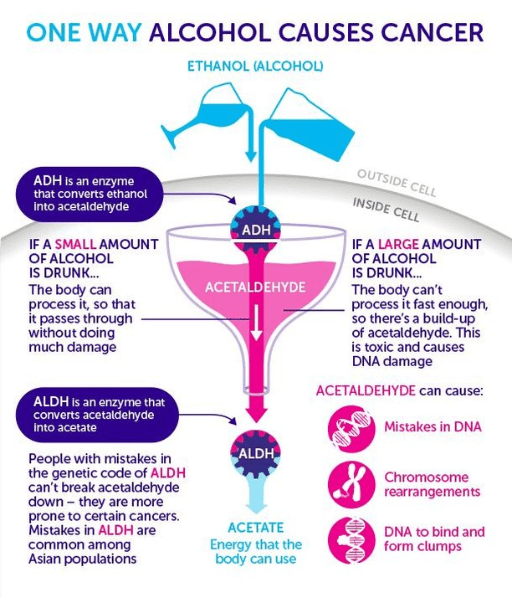
1. Change Your DNA — and Make You Crave More Alcohol

Binge drinking, which the National Institute on Alcohol Abuse and Alcoholism (NIAAA) characterizes as more than four or five drinks in a two-hour sitting, and heavy drinking, defined as binge drinking on five or more days a month, can actually change your genetic makeup. A recent study, published in December 2018 in the journal Alcoholism: Clinical & Experimental Research, identified two genes that are subject to change — one affecting the body’s biological clock and one regulating the stress response system. The study’s authors, from Rutgers University, also found that the genetic changes in binge and heavy drinkers were associated with a higher desire for alcohol.

2. Increase the Risk of Cancer — Especially of the Head, Neck, Liver, and Breast

The National Cancer Institute (NCI) cites several studies, such as one published in August 2012 in the journal Annals of Oncology, that have shown consuming alcohol ups the risk of an array of cancers. In 2012, over 5 percent of all new cancer occurrences and nearly 6 percent of all cancer deaths worldwide were estimated to be attributed to alcohol, according to a study published in October 2015 in the International Journal of Cancer. In heavy drinkers, the risk skyrockets. For example, heavy drinkers are 5 times more likely than nondrinkers to contract esophageal cancer, according to the NCI. But even moderate drinking increases the odds of getting cancer of the mouth, throat, and breast. Kathy Jung, PhD, director of the NIAAA’s division of metabolism and health effects, cautions about breast cancer specifically, saying as little as one drink a day can increase risk.

3. Change the Composition of Organisms in the Gut

There are tens of trillions of microorganisms — mostly “good” bacteria — in the digestive tract that help the body do things like digest food and produce vitamins. But alcohol interferes with their composition and function, according to a study published in 2015 in the journal Alcohol Research: Current Reviews, which found that chronic alcohol consumption can cause bacterial overgrowth and imbalances in the intestine. This can result in a slew of digestive issues, including stomach pain, bloating, constipation, diarrhea, and rosacea.

4. Affect Long-Term Memory and Brain Structure

One night of binge or heavy drinking can lead to blackouts, spans of time from which the intoxicated person can’t remember key events and details — if they can remember anything at all. But alcohol consumption can also cause long-term problems with brain function. People who drink heavily, over a long period of time, are at risk of changing the brain’s “hard wiring,” which can lead to cognitive problems even after sobriety is attained, reports American Addiction Centers. Heavy alcohol consumption can also erode brain tissue and raise the risk of stroke, according to previous research.

5. Cause Hormonal Disturbances

Chronic heavy drinking can also wreak havoc on the body’s endocrine system. The hormone producing glands tap into several important functions of the body, including growth and development, metabolism, and mood. Research published in September 2013 in the journal Endocrine and Metabolism Clinics of North America found that drinking heavily, and often, can disrupt communication between the nervous, endocrine, and immune systems. The consequences can be serious and wide ranging. Stress abnormalities, reproductive deficits, body growth defects, and immune dysfunction are just a few of the possible outcomes topping the list.

How Much Alcohol Is Too Much?

Medical professionals advise moderation when it comes to alcohol consumption. More than one drink a day for women and two for men gets into heavy and binge drinking territory, according to dietary guidelines published by the federal government’s Office of Disease Prevention and Health Promotion.

“Having one drink every day of the week is not the same as having seven drinks on a Saturday,” Dr. Jung says. “Binge drinking is never safe.”

 

Everyday Health
@EverydayHealth

This is what drinking too much does to your body.

5 Things Drinking Too Much Alcohol May Be Doing to Your Body

alcohol after 40

When you wake up with a hangover, it’s a no-brainer that last night’s drinks didn’t do you much good. But research shows that the effects of heavy alcohol consumption may be doing much more to your body than just leaving you with one day of misery. Over time, as the drinks add up, alcohol can affect your biology, changing it in detrimental ways.

Excess alcohol consumption can:

1. Change Your DNA — and Make You Crave More Alcohol

Binge drinking, which the National Institute on Alcohol Abuse and Alcoholism (NIAAA) characterizes as more than four or five drinks in a two-hour sitting, and heavy drinking, defined as binge drinking on five or more days a month, can actually change your genetic makeup. A recent study, published in December 2018 in the journal Alcoholism: Clinical & Experimental Research, identified two genes that are subject to change — one affecting the body’s biological clock and one regulating the stress response system. The study’s authors, from Rutgers University, also found that the genetic changes in binge and heavy drinkers were associated with a higher desire for alcohol.

2. Increase the Risk of Cancer — Especially of the Head, Neck, Liver, and Breast

The National Cancer Institute (NCI) cites several studies, such as one published in August 2012 in the journal Annals of Oncology, that have shown consuming alcohol ups the risk of an array of cancers. In 2012, over 5 percent of all new cancer occurrences and nearly 6 percent of all cancer deaths worldwide were estimated to be attributed to alcohol, according to a study published in October 2015 in the International Journal of Cancer. In heavy drinkers, the risk skyrockets. For example, heavy drinkers are 5 times more likely than nondrinkers to contract esophageal cancer, according to the NCI. But even moderate drinking increases the odds of getting cancer of the mouth, throat, and breast. Kathy Jung, PhD, director of the NIAAA’s division of metabolism and health effects, cautions about breast cancer specifically, saying as little as one drink a day can increase risk.

3. Change the Composition of Organisms in the Gut

There are tens of trillions of microorganisms — mostly “good” bacteria — in the digestive tract that help the body do things like digest food and produce vitamins. But alcohol interferes with their composition and function, according to a study published in 2015 in the journal Alcohol Research: Current Reviews, which found that chronic alcohol consumption can cause bacterial overgrowth and imbalances in the intestine. This can result in a slew of digestive issues, including stomach pain, bloating, constipation, diarrhea, and rosacea.

4. Affect Long-Term Memory and Brain Structure

One night of binge or heavy drinking can lead to blackouts, spans of time from which the intoxicated person can’t remember key events and details — if they can remember anything at all. But alcohol consumption can also cause long-term problems with brain function. People who drink heavily, over a long period of time, are at risk of changing the brain’s “hard wiring,” which can lead to cognitive problems even after sobriety is attained, reports American Addiction Centers. Heavy alcohol consumption can also erode brain tissue and raise the risk of stroke, according to previous research.

5. Cause Hormonal Disturbances

Chronic heavy drinking can also wreak havoc on the body’s endocrine system. The hormone producing glands tap into several important functions of the body, including growth and development, metabolism, and mood. Research published in September 2013 in the journal Endocrine and Metabolism Clinics of North America found that drinking heavily, and often, can disrupt communication between the nervous, endocrine, and immune systems. The consequences can be serious and wide ranging. Stress abnormalities, reproductive deficits, body growth defects, and immune dysfunction are just a few of the possible outcomes topping the list.

How Much Alcohol Is Too Much?

Medical professionals advise moderation when it comes to alcohol consumption. More than one drink a day for women and two for men gets into heavy and binge drinking territory, according to dietary guidelines published by the federal government’s Office of Disease Prevention and Health Promotion.

“Having one drink every day of the week is not the same as having seven drinks on a Saturday,” Dr. Jung says. “Binge drinking is never safe.”


Everyday Health
@EverydayHealth

This is what drinking too much does to your body.