Dr.Paddy Barrett – The Truth About Alcohol and Health

Why the idea that “a little red wine is good for your heart” doesn’t hold up anymore.

I used to drink.

A lot more than I should have.

And while I had some seriously good times when I was drinking, it came at a huge cost.

Brutal hangovers. Terrible sleep. Wrecked weekends.

Even a broken back.

(But that’s a story for another day.)

I still drink.

But just very little these days.

As a cardiologist, I am asked almost every day if ‘Alcohol is good or bad for your health?’.

Let’s find out.

Alcohol Is A Toxin.

There is no getting away from the fact that, at its most basic chemical foundation, alcohol is a toxin.

Globally, alcohol is responsible for 3 million deaths per year; in the United States, it is the third leading cause of preventable death¹².

Alcohol is a factor in³:

  • 30% of suicides
  • 40% of fatal burn injuries
  • 50% of fatal drownings
  • 50% of homicides
  • 65% of fatal falls
  • 29% of fatal road traffic accidents

Alcohol is a factor in 1 in 5 emergency department presentations⁴.

No pun intended, but these statistics make for some sober reading.

‘Red Wine Is Good For Your Heart.’

Now come on.

Did you really think that was true?

I have heard this phrase over and over again in my clinical practice.

High levels of exercise are good for your heart, but oddly enough, most people seem to be far less enthusiastic about this approach than regular alcohol consumption.

Let’s see what the data says.

Up until very recently, it was believed that drinking 1-2 drinks per day was actually protective when it came to dying prematurely⁵.

This data was based on observational studies that cannot fully control for all confounders and can therefore not infer causality.

When you examine the people who drink only 1 to 2 drinks per day, you consistently find that they are much less likely to smoke, be overweight or engage in any other risky health behaviours.

So in truth, it probably wasn’t the alcohol that was driving the effect.

More recent studies have attempted to control for this variable more carefully, and the relationship is clear.

The more you drink.

The higher the risk.

Take coronary artery disease. Higher alcohol intake equates to a higher risk.

The same applies to high blood pressure⁶.

The same applies to stroke⁷.

The list goes on⁸:

  • Atrial fibrillation – Higher risk.
  • Sudden death – Higher risk.
  • Heart failure – Higher risk.
  • Liver, Breast, Colorectal, Oropharyngeal Cancer – Higher Risk⁹.

You get the point.

With all this information to hand, why is it then that I and billions of others continue to drink alcohol?…

Subscribe to Dr Paddy Barrett to unlock the rest.

Become a paying subscriber of Dr Paddy Barrett to get access to this post and other subscriber-only content.

Upgrade to paid

A subscription gets you:

Subscriber Only Posts & Access To Full Archive
25% Discount On Live Education Sessions & AMA’s
Discounts On Courses & Live Education Sessions & AMA’s

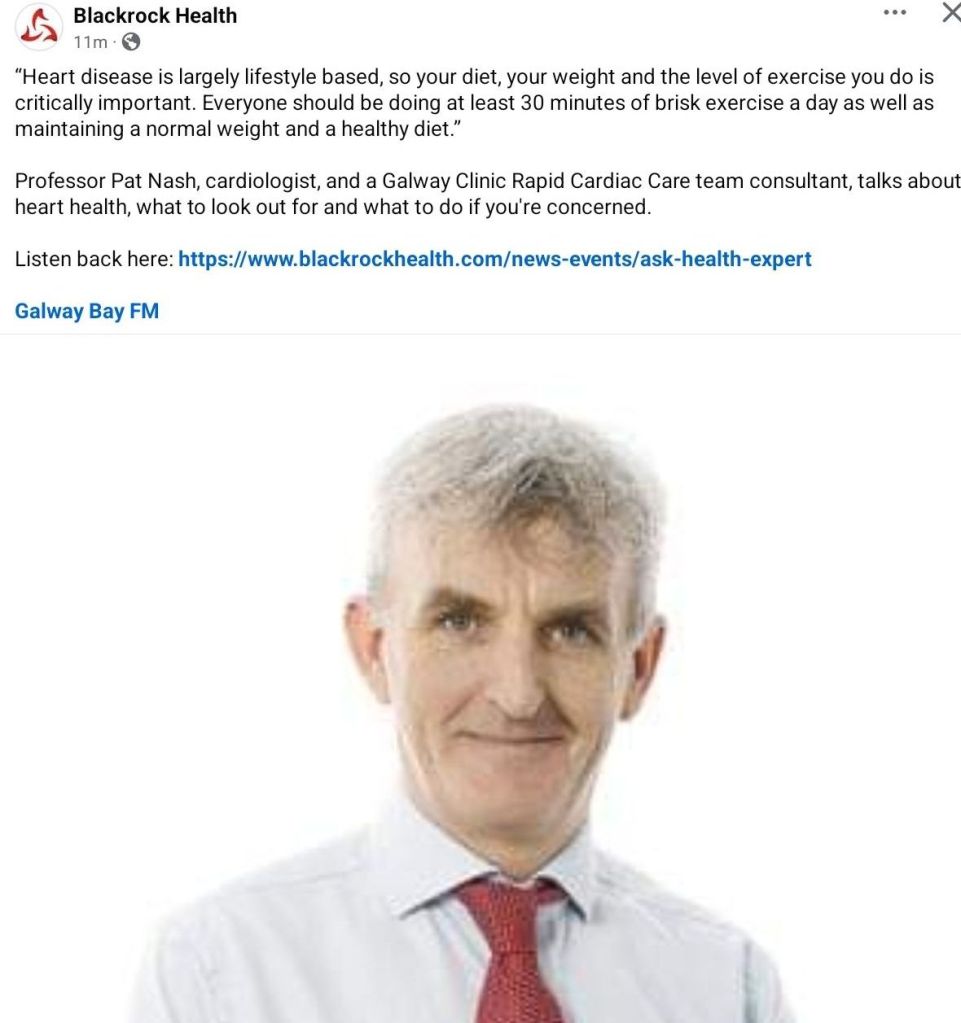
Today is #WorldHeartDay, Professor Pat Nash, Consultant Cardiologist at Blackrock Health, explains the types of screening tests available for heart disease.

Today is #WorldHeartDay, and we are shining a light on proactive cardiac health.

Professor Pat Nash, Consultant Cardiologist at Blackrock Health, explains the types of screening tests available for heart disease.

Professor Nash always checks key factors like smoking, diet, weight, lifestyle, exercise, and blood pressure. If there’s a strong family history, a CT Calcium Score – a powerful tool for gaining deeper insights and guiding personalised prevention strategies – might be recommended for more detail.

Knowing your risks is key to a healthy heart. Explore our cardiology services and advanced screening options: https://ow.ly/M2Fu50WP841

#IrishHeartMonth#WorldHeartDay#HeartHealth#HeartScreening#PreventativeCare#BlackrockHealth#BlackrockHealthyHeart

March is #Endometriosis Awareness Month at Blackrock Health

🎗️

Endometriosis abstract concept vector illustration. Endometrium dysfunctionality, gynecological clinic, endometriosis diagnostic and treatment, female reproductive function abstract metaphor.

Blackrock Health

sntSdeproo06m8a39h3661cm37379c0f3186752gl91t937c2i23f3280f4c  · 

🎗️ March is Endometriosis Awareness Month. Did you know this condition affects 1 in 10 women?

Endometriosis can cause debilitating pain, fertility issues, and significantly impact quality of life.

Megan Davenport, MISCP, Senior Physiotherapist in Pelvic Health at Blackrock Clinic, sheds light on the condition and its symptoms:

“Endometriosis can affect women at any age, from puberty to menopause, though its impact may persist throughout life. It is not just “bad period pain”—it is a long-term condition, and each person’s experience with endometriosis is different.

Women with endometriosis experience a wide range of symptoms, with the most commonly recognised including:

– Heavy periods (needing to change pads/tampons every hour or so)

– Painful periods that interfere with daily activities

– Pelvic, abdominal or back pain, sometimes radiating down the thighs

– Pain during or after sex

– Pain with urination or having a bowel motion

Fatigue, bloating and nausea can also be experienced as well as anxiety and depression.

Link to full article:

Lorraine Cooney, Specialist Gastroenterology Dietitian and Head of Dietetics Department at Blackrock Health, Blackrock Clinic #WorldIBDDay #GutHealth

This World IBD Day, we’re recognising the strength of those living with Inflammatory Bowel Disease (IBD). Conditions like Crohn’s Disease and Ulcerative Colitis can be unpredictable, often bringing physical discomfort and emotional strain.

As Lorraine Cooney, Specialist Gastroenterology Dietitian and Head of Dietetics Department at Blackrock Health, Blackrock Clinic, says,

“IBD affects more than just your gut—it can impact every part of life. And diet in IBS matters! There’s no one-size-fits-all, so support should be personal. The right approach depends on your type of IBD, how active it is, any IBS-type symptoms, your nutrition status, culture and even your relationship with food. On World IBD Day, let’s raise awareness and remind people with IBD that they’re not alone.”

At Blackrock Health, our gastroenterology teams understand the impact of IBD. Across our three hospitals, we offer expert care, timely diagnostics, and ongoing support to help patients manage symptoms and take back control of their health.

If you’re living with IBD or experiencing persistent digestive issues, we’re here to help.

Learn more here: https://ow.ly/sfTE50VPVtZ

#WorldIBDDay#CrohnsAndColitis#BlackrockHealth#GutHealthCare#BetterTogether

Dr.Paddy Barrett – The Truth About Alcohol and Health

Why the idea that “a little red wine is good for your heart” doesn’t hold up anymore.

I used to drink.

A lot more than I should have.

And while I had some seriously good times when I was drinking, it came at a huge cost.

Brutal hangovers. Terrible sleep. Wrecked weekends.

Even a broken back.

(But that’s a story for another day.)

I still drink.

But just very little these days.

As a cardiologist, I am asked almost every day if ‘Alcohol is good or bad for your health?’.

Let’s find out.

Alcohol Is A Toxin.

There is no getting away from the fact that, at its most basic chemical foundation, alcohol is a toxin.

Globally, alcohol is responsible for 3 million deaths per year; in the United States, it is the third leading cause of preventable death¹².

Alcohol is a factor in³:

  • 30% of suicides
  • 40% of fatal burn injuries
  • 50% of fatal drownings
  • 50% of homicides
  • 65% of fatal falls
  • 29% of fatal road traffic accidents

Alcohol is a factor in 1 in 5 emergency department presentations⁴.

No pun intended, but these statistics make for some sober reading.

‘Red Wine Is Good For Your Heart.’

Now come on.

Did you really think that was true?

I have heard this phrase over and over again in my clinical practice.

High levels of exercise are good for your heart, but oddly enough, most people seem to be far less enthusiastic about this approach than regular alcohol consumption.

Let’s see what the data says.

Up until very recently, it was believed that drinking 1-2 drinks per day was actually protective when it came to dying prematurely⁵.

This data was based on observational studies that cannot fully control for all confounders and can therefore not infer causality.

When you examine the people who drink only 1 to 2 drinks per day, you consistently find that they are much less likely to smoke, be overweight or engage in any other risky health behaviours.

So in truth, it probably wasn’t the alcohol that was driving the effect.

More recent studies have attempted to control for this variable more carefully, and the relationship is clear.

The more you drink.

The higher the risk.

Take coronary artery disease. Higher alcohol intake equates to a higher risk.

The same applies to high blood pressure⁶.

The same applies to stroke⁷.

The list goes on⁸:

  • Atrial fibrillation – Higher risk.
  • Sudden death – Higher risk.
  • Heart failure – Higher risk.
  • Liver, Breast, Colorectal, Oropharyngeal Cancer – Higher Risk⁹.

You get the point.

With all this information to hand, why is it then that I and billions of others continue to drink alcohol?…

Subscribe to Dr Paddy Barrett to unlock the rest.

Become a paying subscriber of Dr Paddy Barrett to get access to this post and other subscriber-only content.

Upgrade to paid

A subscription gets you:

Subscriber Only Posts & Access To Full Archive
25% Discount On Live Education Sessions & AMA’s
Discounts On Courses & Live Education Sessions & AMA’s

Dr.Paddy Barrett – The Truth About Alcohol and Health

Why the idea that “a little red wine is good for your heart” doesn’t hold up anymore.

I used to drink.

A lot more than I should have.

And while I had some seriously good times when I was drinking, it came at a huge cost.

Brutal hangovers. Terrible sleep. Wrecked weekends.

Even a broken back.

(But that’s a story for another day.)

I still drink.

But just very little these days.

As a cardiologist, I am asked almost every day if ‘Alcohol is good or bad for your health?’.

Let’s find out.

Alcohol Is A Toxin.

There is no getting away from the fact that, at its most basic chemical foundation, alcohol is a toxin.

Globally, alcohol is responsible for 3 million deaths per year; in the United States, it is the third leading cause of preventable death¹².

Alcohol is a factor in³:

  • 30% of suicides
  • 40% of fatal burn injuries
  • 50% of fatal drownings
  • 50% of homicides
  • 65% of fatal falls
  • 29% of fatal road traffic accidents

Alcohol is a factor in 1 in 5 emergency department presentations⁴.

No pun intended, but these statistics make for some sober reading.

‘Red Wine Is Good For Your Heart.’

Now come on.

Did you really think that was true?

I have heard this phrase over and over again in my clinical practice.

High levels of exercise are good for your heart, but oddly enough, most people seem to be far less enthusiastic about this approach than regular alcohol consumption.

Let’s see what the data says.

Up until very recently, it was believed that drinking 1-2 drinks per day was actually protective when it came to dying prematurely⁵.

This data was based on observational studies that cannot fully control for all confounders and can therefore not infer causality.

When you examine the people who drink only 1 to 2 drinks per day, you consistently find that they are much less likely to smoke, be overweight or engage in any other risky health behaviours.

So in truth, it probably wasn’t the alcohol that was driving the effect.

More recent studies have attempted to control for this variable more carefully, and the relationship is clear.

The more you drink.

The higher the risk.

Take coronary artery disease. Higher alcohol intake equates to a higher risk.

The same applies to high blood pressure⁶.

The same applies to stroke⁷.

The list goes on⁸:

  • Atrial fibrillation – Higher risk.
  • Sudden death – Higher risk.
  • Heart failure – Higher risk.
  • Liver, Breast, Colorectal, Oropharyngeal Cancer – Higher Risk⁹.

You get the point.

With all this information to hand, why is it then that I and billions of others continue to drink alcohol?…

Subscribe to Dr Paddy Barrett to unlock the rest.

Become a paying subscriber of Dr Paddy Barrett to get access to this post and other subscriber-only content.

Upgrade to paid

A subscription gets you:

Subscriber Only Posts & Access To Full Archive
25% Discount On Live Education Sessions & AMA’s
Discounts On Courses & Live Education Sessions & AMA’s