
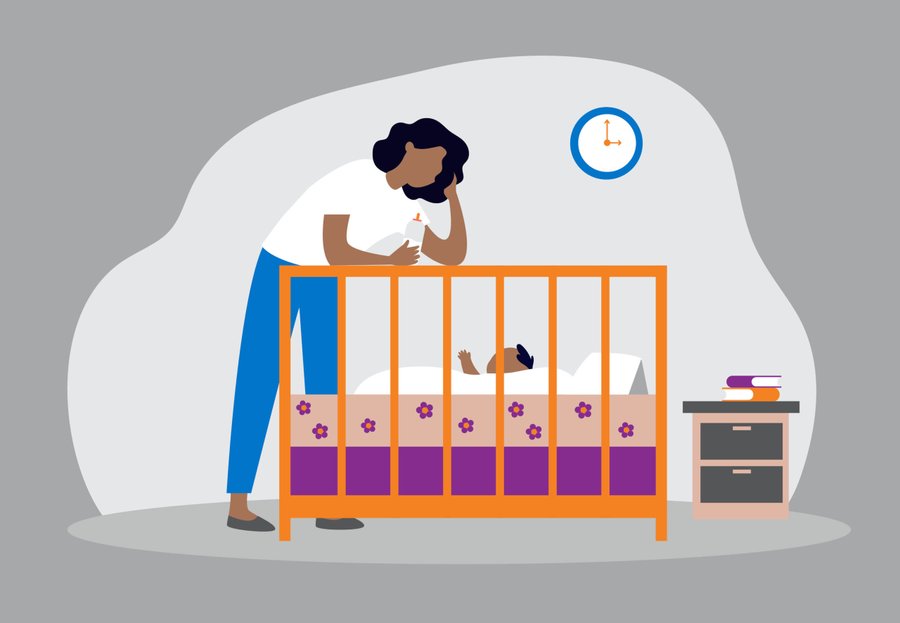
“Lowering the crib isn’t so much about age, it’s about your baby’s abilities,” says pediatrician Laura O’Connor, MD.

Signs It’s Time To Lower Your Baby’s Crib Mattress

There’s no magical age or height — it’s all a matter of your baby’s mobility

Funny how quickly things change when it comes to babies, right? One day it’s all swaddles and burp cloths and tummy time. Then, before you know it, they’re crawling around trying to drink out of the dog’s water bowl. 

Babies hit new milestones faster than you can say, That’s one for the baby book. And while you’re looking for a pen, you might want to grab a screwdriver, too. Because as your baby becomes more mobile, it’s a cue that it’s time to lower their crib. 

“Lowering the crib isn’t so much about age, it’s about your baby’s abilities,” says pediatrician Laura O’Connor, MD. “The more mobile your baby gets, the lower the crib should go.” 

So, if you can’t plan on your calendar when the right time is, how will you know when to lower the crib mattress? Dr. O’Connor shares some tips for what to look for. 

When to lower the crib mattress 

Sure, back in the day, cribs with drop-down sides were all the rage. But they’ve been banned after they were found to result in serious injuries and even deaths. 

Most cribs these days come with high, middle and low settings for the mattress. That’s for both parents’ comfort and baby’s safety.  

Think about it: If your newborn’s crib mattress was down below your knees, you’d be reaching awfully low to place them in bed. And it would be just about impossible to get them back out without crawling in yourself. (Don’t do that. Your crib isn’t meant to hold an adult’s weight.)  

On the other hand, a baby who can stand would be in danger of taking a big tumble if their mattress was only a few inches below the crib rail.  

But all those different height settings can be confusing. You’ll rest easier knowing your little tot is safe in their crib. Dr. O’Connor helps us take the guesswork out of each crib setting with this quick reference guide:  

Developmental stageSleeping arrangementApproximate age
Newborn.Bassinet or crib’s highest setting.Under 4 months.
Baby who can roll over.Crib’s highest setting.  4 months old.
Baby who can sit up, “commando crawl” or get up on their hands and knees.Crib’s middle setting.6 months old.
Baby who can stand up or pull themselves up to standing.Crib’s lowest setting.9 months old.
Baby who can climb out of the crib or has outgrown the crib.Big-kid bed.Anywhere from 18 months to about 3 years old.

 
Consult your crib’s instruction manual for specifics on how to lower the crib mattress. Most manufacturers provide them online if you can’t find yours. Be sure to tighten all screws securely. 

Highest crib setting 

If your infant has been sleeping in a bassinet, they should be moved to a crib by the time they can roll over, Dr. O’Connor says. For many babies, that happens somewhere around 4 months old.  

But bassinets have different height and weight restrictions. Even if your little one isn’t yet rolling, if they’ve reached the maximum height or weight for the bassinet, it’s time to move to a crib to make sure they have the stability and protection they need. 

The highest setting on your crib is the right place for babies who can’t sit up.  

“Infants have so little control over their bodies, it’s important for their safety, and for everyone’s comfort, if parents don’t have to bend too far to lay them down or pick them up,” O’Connor explains. 

Middle crib setting 

After rolling over, other mobility milestones come fast. And with baby’s new moves comes another shift in crib height.  

Dr. O’Connor says you should plan to move your crib mattress to the middle height before your baby can crawl. Move the crib down when your baby can start to do any of these pre-crawling actions:  

  • Sit up on their own. 
  • Crawl “commando style” (inch forward by pulling with their arms with their bellies on the ground). 
  • Assume a crawling position, by getting up on their hands and knees. 

Many babies begin to hit these milestones around 6 months old. But they may come even earlier, so let your baby’s abilities be your guide. 

Lowest crib setting 

Standing and walking are probably two of the most exciting milestones in your baby’s first year. And they’re signs that it’s time for the crib to be lowered for its last time. 

“By the time your baby can stand up or pull themselves up, their crib should be at its lowest setting,” Dr. O’Connor notes. “If the crib mattress is too high, it becomes a big fall risk.”  

Some babies may start off standing by using furniture (or whatever’s handy … say, your leg) to pull themselves up. And the rails on their crib can be perfect for pulling up.  

So, even if your baby doesn’t stand up independently yet, any standing is a sign that it’s time to move the crib mattress to its lowest point. 

And don’t let sleep sacks or other swaddles lull you into a false sense of security. Sure, they can make standing harder. But even with a sleep sack on, your baby can try to pull themselves to standing. So, if they can get up on their own two feet without the sleep sack, it’s time to make the crib at low as it goes.  

Time for a big-kid bed 

After the crib reaches its lowest point, it can stay there for a while, Dr. O’Connor says. Most toddlers should sleep in a crib until they’re at least 18 months old. Some may not need to move to a toddler bed until well after their third birthday. 

The American Academy of Pediatrics recommends toddlers move to a bed if:  

  • They’re 35 inches tall.  
  • The crib rail is in line with the middle of their chest (at their nipples) when they stand in their crib. 
  • They climb out of the crib. 

“If your baby is climbing out of their crib or has outgrown it and causing a dangerous situation, it’s time to move to a bed. If not, it’s better to save the bed for a while,” Dr. O’Connor advises. “Beds come with a lot of autonomy and responsibility for your child, so the longer you can wait, the better for most people.” 

Keep safety first   

Of course, crib height is just one part of making sure your baby has a safe sleep environment. You also want to make sure you’re following these other safe sleep practices during your baby’s first year:  

  • Use the firm side of the crib mattress. 
  • Keep pillows, blankets, stuffed animals and other soft items out of the crib. 
  • Don’t use crib bumpers
  • Put your baby to sleep on their back. 
  • Don’t share your bed with your baby. 

If you have any questions about crib safety or safe sleep, Dr. O’Connor says to talk with your child’s healthcare provider. They can help you understand the best ways to keep your baby safe and sleeping soundly

FACEBOOKTWITTERLINKEDINPINTERESTEmail

Can Babies Get Strep Throat? @ClevelandClinic #healthaware

It’s uncommon in kids under 3, but providers may test under certain circumstances

We’ve all done it

Stared into the mirror, flashlight trained on our open mouths, searching for the telltale white patches that typically indicate strep throat. If we see them, we’re off to our primary care practitioner or nearest medical express center for a rapid strep test and, if needed, a course of antibiotics. No big deal.

But when it comes to your baby or toddler, any hint of illness does feel like a big deal.

The fact that untreated strep can cause complications makes the guessing game all the more stressful. That’s why we asked pediatrician Wadie Shabab, MD, FAAP, whether it’s possible for children under 3 to contract strep throat and what worried parents should do if they think their wee one has it.

What is strep throat?

Acute streptococcal pharyngitis (strep throat) is a highly contagious bacterial infection. It can spread through respiratory droplets or through direct contact, like sharing a cup or touching an infected surface. Strep has an incubation period — the time when you’re contagious but aren’t yet showing any symptoms — of two to five days, which makes it easy to spread, especially in crowded places like schools and daycare facilities.

Strep throat is most common in kids between the ages of 5 and 15. Certain strains of strep throat can cause a red rash known as scarlet fever or a skin infection called impetigo. Luckily, antibiotics can speed up the recovery process and reduce the amount of time a person’s contagious.

Left untreated, strep throat can cause rheumatic fever or a serious kidney problem called acute glomerulonephritis. But these complications are rare. Where we see do see rheumatic fever and glomerulonephritis, it’s usually in resource-poor countries with limited access to antibiotics.

Can babies get strep?

That’s the cloud. Here’s the silver lining: “In general, it’s uncommon for children younger than 3 to have strep throat,” Dr. Shabab says. It’s much more likely that a virus is causing your kiddo’s discomfort.

And there’s more good news: Strep infections also tend to be milder and cause fewer dangerous complications in infants and toddlers than they do in older kids.

Symptoms of strep in kids

While rare, it is possible for a very young child to contract strep throat. And the infection can cause different symptoms than the ones you see in older children and adults. Here are some things to look out for:

  • Red throat with white patches.
  • Fever.
  • Crankiness or irritability.
  • Loss of appetite or excessive drooling.
  • Difficulty sleeping.
  • Swollen lymph nodes.

Even if your baby ticks most of those boxes, Dr. Shabab says it’s possible a healthcare provider will decide not to test or treat for strep.

Why do doctors avoid strep tests for kids under age 3?

Why would your pediatrician opt out of strep testing your sick child? Dr. Shabab says that in addition to contracting strep being rare, the likelihood of complications is also rare.

“We treat strep to decrease the duration of the symptoms and prevent complications such as sinus infections, ear infections and abscesses in the throat area,” he explains. “But the most important reason we treat strep throat is to prevent acute rheumatic fever and acute glomerulonephritis.”

According to Dr. Shabab, it’s very rare for children under 3 to develop these complications, so providers frequently opt not to test and let whatever is happening resolve on its own.

But as with any rule, there are important exceptions to be aware of.

When DO doctors test children under 3 for strep?

More often than not, a child under 3 isn’t going to have strep throat. But that doesn’t mean there aren’t times when it’s important to be sure.

Your healthcare provider will likely perform a throat swab on your child if they’re ill and:

  • There’s been an outbreak at their daycare or pre-kindergarten class.
  • They’ve been in close contact with a person who’s tested positive.
  • They see something while examining your child that leads them to suspect a strep infection.

If your little one’s test comes back positive, their provider might prescribe antibiotics.

Preventing strep throat

The single best way to reduce your risk of strep throat is by practicing good hygiene. Unfortunately, children under 3 aren’t known for their cleanliness. Still, getting your children in the habit of washing their hands for 20 seconds with soap and warm water throughout the day, before eating and after sneezing or coughing is a great first step. And modeling the behavior will help you avoid getting sick, which improves your kiddo’s chances of staying healthy, too!

Here are a few other things you can do to minimize the chances of strep making its way into your home:

  • Carry hand sanitizerSmall children can make big messes and expose themselves to all sorts of germs in the process. If you aren’t able to get them to a sink to wash their hands, dipping into your hand sanitizer reserves is your next best option.
  • Keep tissues handy. Teaching kids to wipe their noses with tissues — not arms, hands, clothes or friends — is easier said than done. But having tissues available may make it easier.
  • Cough or sneeze into your elbow. If you happen to catch your little one coughing or sneezing into their hands, make sure they wash up (or at least use some hand sanitizer) as soon as possible.
  • Sharing isn’t always caring. If somebody in your house is sick — with strep throat or anything else — avoid sharing things like utensils, food and cups.
  • Stay home if you’re unwell. If you or your child test positive for strep throat, stay home from work or daycare (if possible) until you’ve been on antibiotics for 48 hours.

The bottom line

It’s rare for children under the age of 3 to get strep throat — and still more unusual for them to get seriously ill as a result. Again, healthcare providers rarely test for it as a result, unless your child is ill and:

  • Has been in close contact with a person who has a confirmed case.
  • There’s been a breakout reported in their daycare center, or anywhere they spend a lot of time.
  • They see convincing evidence of strep when examining your child.

Very young children tend not to have the same symptoms as older children with strep throat. If you’re concerned about their symptoms — especially if they have a fever — contact their pediatrician immediately.
“Lowering the crib isn’t so much about age, it’s about your baby’s abilities,” says pediatrician Laura O’Connor, MD.

Signs It’s Time To Lower Your Baby’s Crib Mattress

There’s no magical age or height — it’s all a matter of your baby’s mobility

Funny how quickly things change when it comes to babies, right? One day it’s all swaddles and burp cloths and tummy time. Then, before you know it, they’re crawling around trying to drink out of the dog’s water bowl. 

Babies hit new milestones faster than you can say, That’s one for the baby book. And while you’re looking for a pen, you might want to grab a screwdriver, too. Because as your baby becomes more mobile, it’s a cue that it’s time to lower their crib. 

“Lowering the crib isn’t so much about age, it’s about your baby’s abilities,” says pediatrician Laura O’Connor, MD. “The more mobile your baby gets, the lower the crib should go.” 

So, if you can’t plan on your calendar when the right time is, how will you know when to lower the crib mattress? Dr. O’Connor shares some tips for what to look for. 

When to lower the crib mattress 

Sure, back in the day, cribs with drop-down sides were all the rage. But they’ve been banned after they were found to result in serious injuries and even deaths. 

Most cribs these days come with high, middle and low settings for the mattress. That’s for both parents’ comfort and baby’s safety.  

Think about it: If your newborn’s crib mattress was down below your knees, you’d be reaching awfully low to place them in bed. And it would be just about impossible to get them back out without crawling in yourself. (Don’t do that. Your crib isn’t meant to hold an adult’s weight.)  

On the other hand, a baby who can stand would be in danger of taking a big tumble if their mattress was only a few inches below the crib rail.  

But all those different height settings can be confusing. You’ll rest easier knowing your little tot is safe in their crib. Dr. O’Connor helps us take the guesswork out of each crib setting with this quick reference guide:  

Developmental stageSleeping arrangementApproximate age
Newborn.Bassinet or crib’s highest setting.Under 4 months.
Baby who can roll over.Crib’s highest setting.  4 months old.
Baby who can sit up, “commando crawl” or get up on their hands and knees.Crib’s middle setting.6 months old.
Baby who can stand up or pull themselves up to standing.Crib’s lowest setting.9 months old.
Baby who can climb out of the crib or has outgrown the crib.Big-kid bed.Anywhere from 18 months to about 3 years old.

 
Consult your crib’s instruction manual for specifics on how to lower the crib mattress. Most manufacturers provide them online if you can’t find yours. Be sure to tighten all screws securely. 

Highest crib setting 

If your infant has been sleeping in a bassinet, they should be moved to a crib by the time they can roll over, Dr. O’Connor says. For many babies, that happens somewhere around 4 months old.  

But bassinets have different height and weight restrictions. Even if your little one isn’t yet rolling, if they’ve reached the maximum height or weight for the bassinet, it’s time to move to a crib to make sure they have the stability and protection they need. 

The highest setting on your crib is the right place for babies who can’t sit up.  

“Infants have so little control over their bodies, it’s important for their safety, and for everyone’s comfort, if parents don’t have to bend too far to lay them down or pick them up,” O’Connor explains. 

Middle crib setting 

After rolling over, other mobility milestones come fast. And with baby’s new moves comes another shift in crib height.  

Dr. O’Connor says you should plan to move your crib mattress to the middle height before your baby can crawl. Move the crib down when your baby can start to do any of these pre-crawling actions:  

  • Sit up on their own. 
  • Crawl “commando style” (inch forward by pulling with their arms with their bellies on the ground). 
  • Assume a crawling position, by getting up on their hands and knees. 

Many babies begin to hit these milestones around 6 months old. But they may come even earlier, so let your baby’s abilities be your guide. 

Lowest crib setting 

Standing and walking are probably two of the most exciting milestones in your baby’s first year. And they’re signs that it’s time for the crib to be lowered for its last time. 

“By the time your baby can stand up or pull themselves up, their crib should be at its lowest setting,” Dr. O’Connor notes. “If the crib mattress is too high, it becomes a big fall risk.”  

Some babies may start off standing by using furniture (or whatever’s handy … say, your leg) to pull themselves up. And the rails on their crib can be perfect for pulling up.  

So, even if your baby doesn’t stand up independently yet, any standing is a sign that it’s time to move the crib mattress to its lowest point. 

And don’t let sleep sacks or other swaddles lull you into a false sense of security. Sure, they can make standing harder. But even with a sleep sack on, your baby can try to pull themselves to standing. So, if they can get up on their own two feet without the sleep sack, it’s time to make the crib at low as it goes.  

Time for a big-kid bed 

After the crib reaches its lowest point, it can stay there for a while, Dr. O’Connor says. Most toddlers should sleep in a crib until they’re at least 18 months old. Some may not need to move to a toddler bed until well after their third birthday. 

The American Academy of Pediatrics recommends toddlers move to a bed if:  

  • They’re 35 inches tall.  
  • The crib rail is in line with the middle of their chest (at their nipples) when they stand in their crib. 
  • They climb out of the crib. 

“If your baby is climbing out of their crib or has outgrown it and causing a dangerous situation, it’s time to move to a bed. If not, it’s better to save the bed for a while,” Dr. O’Connor advises. “Beds come with a lot of autonomy and responsibility for your child, so the longer you can wait, the better for most people.” 

Keep safety first   

Of course, crib height is just one part of making sure your baby has a safe sleep environment. You also want to make sure you’re following these other safe sleep practices during your baby’s first year:  

  • Use the firm side of the crib mattress. 
  • Keep pillows, blankets, stuffed animals and other soft items out of the crib. 
  • Don’t use crib bumpers
  • Put your baby to sleep on their back. 
  • Don’t share your bed with your baby. 

If you have any questions about crib safety or safe sleep, Dr. O’Connor says to talk with your child’s healthcare provider. They can help you understand the best ways to keep your baby safe and sleeping soundly

FACEBOOKTWITTERLINKEDINPINTERESTEmail