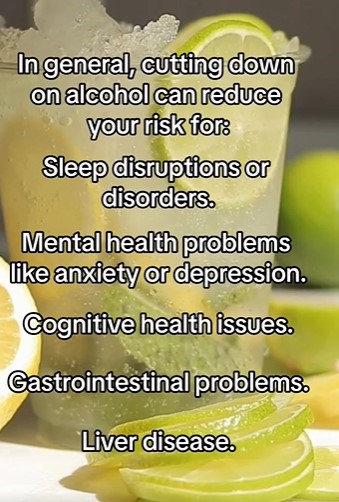
As more people are drinking less, here’s some of the benefits: better sleep, less anxiety/depression, memory’s better, fewer tummy problems @ClevelandClinic

Square profile picture

Cleveland Clinic

@ClevelandClinic

·

As more people are drinking less, there’s been an uptick in more drink companies creating nonalcoholic options. But it can still be tough to figure out which of these options are healthy. Keep an eye on ingredients like sugar, artificial sweeteners and caffeine. If you’re choosing nonalcoholic alternatives, consider options that are low in added sugars and free from unnecessary additives. Consulting a healthcare provider can help ensure your choices support your overall well-being.

Show more

Cleveland Clinic: The connection between pain and your brain:

cleveland chronic back pain

Chronic Back Pain? You May Find Relief With Behavioral Medicine

Understanding the brain’s relationship to pain

No pain, no gain? Not true for people suffering from chronic back pain. Instead, it’s the opposite: Back pain is one of the main causes of missed work (and missed paychecks).

But could the key to coping with chronic back pain be in your mind? “We actually know that pain is not just a sensory, or physical, experience,” says psychologist Sara Davin, PsyD, MPH. “It is also an emotional experience.”

Dr. Davin explains how you can harness your pain management super-powers by understanding the very real connection between pain and your thoughts.

The 411 on the mind-back pain connection

To understand how it all works, think of pain’s purpose. Pain is your brain’s way of alerting you that something is wrong, whether it’s a stubbed toe or a slipped disk.

How your brain processes an injury, then shares that information, has a direct connection to the level of pain you feel. You’re aware of pain because your brain tells you it’s there. (Psst — your brain also controls your thoughts and emotions.)

“Pain is processed in the brain and the central nervous system. Both have areas connected to the sensory experience, but both also have areas connected to the emotional experience,” Dr. Davin explains. “The sensory and emotional go together to create the output of one’s experience of pain. So to comprehensively treat chronic back pain, we have to look at both sides.”

And while traditional treatments like medications and physical therapy can take the edge off, they often ignore the elephant in the room: your thoughts.

“Managing back pain with behavioral medicine strategies might even prevent the pain from becoming chronic,” Dr. Davin states.

What is cognitive behavioral therapy for pain?

CBT for pain is talk therapy’s more specialized cousin. It’s a behavioral medicine strategy that teaches people how to:

  • Make the connection between how they think about their pain and the way they interpret it.
  • Understand how pain impacts their emotions.
  • Choose coping skills to help with how they function and behave.

Still not sold? Dr. Davin gives this example: Someone who feels that their pain is unbearable may cope by lying in bed and isolating themselves from activities they value. “This cycle can go on and on,” she explains. “The person becomes more helpless and then, from a physical standpoint, becomes weaker. Naturally, they now have even more pain.”

With CBT, that helpless feeling (and associated pain) is kicked to the curb because pain psychologists teach people how to:

  • Pace activities so they don’t overdo it.
  • Practice relaxation and meditation to decrease pain and stress.
  • Soothe their central nervous system, which increases the feeling of pain when under stress.

The proof is in the pudding. Dr. Davin runs an interdisciplinary program that uses physical therapy and CBT to treat chronic back pain. Patients participate in this program for 4 to 10 weeks, depending upon their progress.

“Folks in the program were better when compared to physical therapy alone,” she reports. “We have consistently seen significant improvements across all quality of life measures, including how much pain interferes with someone’s life, levels of fatigue, anxiety and depression, plus improvements in pain-related disability.”

Interestingly, one of the metrics that improves the most in the program is how satisfied participants are in their social roles. “In our program we teach people how to start having fun again and connected with others,” Dr. Davin notes. “I suspect this is why we see people wanting to be more socially active after the program.”

3 ways to put this new knowledge into action

Here’s how you can incorporate behavioral medicine strategies into your back pain management:

  1. Find a good pain management doctor. “You want a doctor who helps you rehabilitate and regain quality of life, but who also thinks about pain beyond its physical components,” Dr. Davin says. “Patients often struggle with the behavioral piece and think it means that their pain isn’t real. But your pain is real — you just need someone to help you manage it better using behavioral medicine skills and strategies. Pain psychologists are trained to do this.”
  2. Get your research on. Dr. Davin suggests powering up your e-reader and searching for books that outline the basic strategies for cognitive behavioral therapy for pain. Your doctor may also recommend an online course or resources that offer science-based education about how to overcome chronic pain.
  3. Don’t neglect physical therapy. Dr. Davin emphasizes that physical therapy is essential to maximizing back pain relief. “A physical therapist who’s trained in pain and neuroscience education can explain why behavioral medicine treatments work, plus help you use them,” she says.

https://health.clevelandclinic.org/chronic-back-pain-you-may-find-relief-with-behavioral-medicine/


Alcohol is a Group-1 carcinogen—but one that happens to be woven into our daily lives @PsychToday

Square profile picture

Psychology Today

@PsychToday

·

Alcohol is a Group-1 carcinogen—but one that happens to be woven into our daily lives and often viewed as a go-to way to cope with stress or disappointment. Here are 5 ways to change that mindset, writes

@shailiJainMd

The Hidden Cost of an Evening Glass of Wine

Key points

  • Alcohol is a Group 1 carcinogen—putting it in the same category as asbestos, radiation, and tobacco.
  • Alcohol is woven into our daily lives and often viewed as a go-to way to cope with stress and disappointment.
  • Less than half of Americans are aware that drinking alcohol increases their risk of cancer.
  • There are healthier, more sustainable ways to manage stress.

“I need a stiff drink!” “Let’s drown our sorrows.” “I just need to unwind with a glass of wine.”

Phrases like these are so common, we barely think twice about them. Alcohol has become deeply woven into our daily lives and culture. It’s often seen as a go-to way to cope with stress, disappointment, or just the pressures of everyday life. Got bad news? Feeling overwhelmed? Need to relax? Society has taught us that it’s totally normal—even expected—to pour a big glass of wine, toss back a couple of tequila shots, or order a double whiskey.

In fact, using alcohol to handle stress is often not only accepted but actively encouraged by friends, coworkers, and the media. Movies and TV shows constantly show characters doing the same, reinforcing the idea that this is just how we deal with life.

But here’s the truth: alcohol is the one of the most widely used drugs in the world. And the way we’ve normalized it’s use as a coping mechanism deserves a closer look.

The Hidden Cost of Your Evening Glass of Wine

Alcohol is a toxic, psychoactive substance that can lead to dependence. It’s also been officially classified as a Group 1 carcinogen by the International Agency for Research on Cancer—putting it in the same category as asbestos, radiation, and tobacco. Research shows that alcohol contributes to at least seven different types of cancer, including some of the most common, like colon cancer and breast cancer. In fact, earlier this year, former U.S. Surgeon General Vivek H. Murthy issued a public health advisory warning about the clear link between alcohol use and cancer risk.

What’s concerning is that less than half of Americans are aware that drinking alcohol increases their risk of cancer. As a psychiatrist who often discusses alcohol use with patients, this lines up with what I see in practice. Many people simply don’t know that alcohol is a carcinogen. Even more common is the belief that low levels of alcohol—like a glass of wine a day—are actually good for your health, especially for the heart and brain. But that idea is being seriously questioned. In January 2023, the World Health Organization published a statement in The Lancet Public Health making it clear: When it comes to alcohol, there is no safe amount that doesn’t affect your health.

5 Things to Think About Before Reaching for a Drink to Cope With Stress

  1. Alcohol is a known carcinogen—and a cancer diagnosis can deeply affect your mental health. Depression and anxiety are incredibly common among people with cancer. Research shows that up to 1 in 5 cancer patients experience depression, and 1 in 10 struggle with anxiety—regardless of where they are in their treatment or disease process. In fact, according to international diagnostic guidelines, about 35–40% of cancer patients meet the criteria for a psychiatric disorder. These mental health challenges don’t just impact emotional well-being—they can significantly reduce the overall quality of life for persons living with cancer. The global rate of depression among cancer patients is currently estimated at 27%. This is a noticeable increase compared to earlier data, and this trend appears to be on the rise.
  2. That “relaxing” drink may be increasing your anxiety. While alcohol can feel calming in the moment, it’s a short-lived effect. Once the pleasurable effects of alcohol wear off, anxiety can rebound—often worse than before. Over time, this can make stress and mood disorders more difficult to manage.
  3. Regular drinking can sneak up on you—building tolerance, dependence, and emotional numbness. What starts as the occasional glass of wine to unwind can quickly become a nightly ritual. Your body builds tolerance, meaning you need more to feel the same effects. Emotionally, alcohol can dull not just stress but joy, connection, and motivation—leaving you feeling more flat than relaxed.
  4. Alcohol disrupts sleep, even if it helps you fall asleep. Many people use alcohol to wind down at night, but it actually interferes with sleep architecture. It may help you fall asleep faster, but it reduces the quality of your rest—leading to more fatigue, irritability, and difficulty coping with stress the next day.
  5. There are healthier, more sustainable ways to manage stress. Whether it’s exercise, deep breathing, journaling, therapy, or connecting with others, there are countless tools for managing stress that don’t carry the risks alcohol does. Exploring these options might not provide the instant hit that a drink does—but they build resilience, not reliance.

Facebook image: Just Life/Shutterstock

As more people are drinking less, here’s some of the benefits: better sleep, less anxiety/depression, memory’s better, fewer tummy problems @ClevelandClinic

Square profile picture

Cleveland Clinic

@ClevelandClinic

·

As more people are drinking less, there’s been an uptick in more drink companies creating nonalcoholic options. But it can still be tough to figure out which of these options are healthy. Keep an eye on ingredients like sugar, artificial sweeteners and caffeine. If you’re choosing nonalcoholic alternatives, consider options that are low in added sugars and free from unnecessary additives. Consulting a healthcare provider can help ensure your choices support your overall well-being.

Show more