Kickstart your New Year’s health resolutions this month with these top nutrition tips from our Senior Dietitians at Blackrock Health Hermitage Clinic. Prioritise your health this year by following some simple guidelines:
– Prioritise whole foods: Swap processed snacks for nourishing, nutrient-dense snacks such as nuts and dried fruits, fruit and yogurt, cheese and crackers, nutty flapjacks, oat snacks. When opting for convenience snacks be aware of the ingredient list, some snacks which may label themselves as ‘healthy’ alternatives may have a long list of ingredients, generally the more whole ingredients and the shorter the list the better!
– Stay hydrated: Start each day with a glass of water and aim for 8 glasses throughout the day. Proper hydration is key for energy and overall well-being.
– Limit alcohol: Alcohol dehydrates and can cause fatigue which leads to poorer food choices as well as negatively impacting overall health. Swap alcoholic drinks for non-alcoholic alternatives where possible and aiming for at least three alcohol free days per week.
– Stay active: Incorporating some daily movement (outside if possible) will support overall mood, energy levels and health.
– Plan ahead: Try not let busy schedules derail your healthy eating goals. Meal prepping, batch cooking and planning snacks will help you stay on track.
At Blackrock Health, our Dietetics and Clinical Nutrition department is made up of Registered Dietitians who help manage and support a variety of nutritional and medical concerns to patients across our clinics.
Kickstart your New Year’s health resolutions this month with these top nutrition tips from our Senior Dietitians at Blackrock Health Hermitage Clinic. Prioritise your health this year by following some simple guidelines:
– Prioritise whole foods: Swap processed snacks for nourishing, nutrient-dense snacks such as nuts and dried fruits, fruit and yogurt, cheese and crackers, nutty flapjacks, oat snacks. When opting for convenience snacks be aware of the ingredient list, some snacks which may label themselves as ‘healthy’ alternatives may have a long list of ingredients, generally the more whole ingredients and the shorter the list the better!
– Stay hydrated: Start each day with a glass of water and aim for 8 glasses throughout the day. Proper hydration is key for energy and overall well-being.
– Limit alcohol: Alcohol dehydrates and can cause fatigue which leads to poorer food choices as well as negatively impacting overall health. Swap alcoholic drinks for non-alcoholic alternatives where possible and aiming for at least three alcohol free days per week.
– Stay active: Incorporating some daily movement (outside if possible) will support overall mood, energy levels and health.
– Plan ahead: Try not let busy schedules derail your healthy eating goals. Meal prepping, batch cooking and planning snacks will help you stay on track.
At Blackrock Health, our Dietetics and Clinical Nutrition department is made up of Registered Dietitians who help manage and support a variety of nutritional and medical concerns to patients across our clinics.
Evidence suggests “one or fewer drinks per day” may elevate the risk for cancers.
January 6, 2025
The US Surgeon General has issued an advisory recommending updates to alcoholic beverage labels to include warnings about the risks of cancer.
The document, titled Surgeon General’s Advisory on Alcohol and Cancer Risk, addressed the “direct link” between alcohol consumption and an increased risk of cancer.
According to the advisory, alcohol is the “third leading preventable cause” of cancer in the US, following tobacco use and obesity.
It underscored that alcohol consumption contributed to cancers of the breast, colorectum, oesophagus, liver, mouth, throat, and voice box, regardless of the alcohol type.
Cancer risk increases with alcohol intake, and evidence suggests that even low levels—such as “one or fewer drinks per day” —can elevate the risk for breast, mouth, and throat cancers, according to a statement from the Surgeon General’s office.
Dr Murthy called for revising the Surgeon General’s health warning labels on alcohol-containing beverages to include information about cancer risks.
This advisory also emphasised the need to reevaluate recommended limits for alcohol consumption based on the latest research to account for cancer risks.
Dr Murthy said: “Alcohol is a well-established, preventable cause of cancer responsible for about 100,000 cases of cancer and 20,000 cancer deaths annually in the US – greater than the 13,500 alcohol-associated traffic crash fatalities per year in the US – yet the majority of Americans are unaware of this risk.
“This advisory lays out steps we can all take to increase awareness of alcohol’s cancer risk and minimise harm.”
The release also urged public health professionals and community groups to emphasise alcohol consumption “as a leading modifiable cancer risk factor” and improve education efforts to raise public awareness.
The surgeon general advised people to consider the link between alcohol consumption and increased cancer risk “when deciding whether to drink or how much to have”.
The action comes in response to a 2020 letter addressed to Dr Murthy by the Center for Science in the Public Interest, American Institute for Cancer Research, Consumer Federation of America, and US Alcohol Policy Alliance, urging an update to alcoholic beverage labels to include cancer warnings.
In May 2023, Ireland became the “first” country in the European Union to mandate health labelling on alcoholic drinks with the law anticipated to take effect from 22 May 2026.
The Canadian Centre on Substance Use and Addiction (CCSA) issued new guidance in 2023, warning that no level of alcohol consumption is risk-free and recommended a maximum of two drinks per week.
Evidence suggests “one or fewer drinks per day” may elevate the risk for cancers.
January 6, 2025
The US Surgeon General has issued an advisory recommending updates to alcoholic beverage labels to include warnings about the risks of cancer.
The document, titled Surgeon General’s Advisory on Alcohol and Cancer Risk, addressed the “direct link” between alcohol consumption and an increased risk of cancer.
According to the advisory, alcohol is the “third leading preventable cause” of cancer in the US, following tobacco use and obesity.
It underscored that alcohol consumption contributed to cancers of the breast, colorectum, oesophagus, liver, mouth, throat, and voice box, regardless of the alcohol type.
Cancer risk increases with alcohol intake, and evidence suggests that even low levels—such as “one or fewer drinks per day” —can elevate the risk for breast, mouth, and throat cancers, according to a statement from the Surgeon General’s office.
Dr Murthy called for revising the Surgeon General’s health warning labels on alcohol-containing beverages to include information about cancer risks.
This advisory also emphasised the need to reevaluate recommended limits for alcohol consumption based on the latest research to account for cancer risks.
Dr Murthy said: “Alcohol is a well-established, preventable cause of cancer responsible for about 100,000 cases of cancer and 20,000 cancer deaths annually in the US – greater than the 13,500 alcohol-associated traffic crash fatalities per year in the US – yet the majority of Americans are unaware of this risk.
“This advisory lays out steps we can all take to increase awareness of alcohol’s cancer risk and minimise harm.”
The release also urged public health professionals and community groups to emphasise alcohol consumption “as a leading modifiable cancer risk factor” and improve education efforts to raise public awareness.
The surgeon general advised people to consider the link between alcohol consumption and increased cancer risk “when deciding whether to drink or how much to have”.
The action comes in response to a 2020 letter addressed to Dr Murthy by the Center for Science in the Public Interest, American Institute for Cancer Research, Consumer Federation of America, and US Alcohol Policy Alliance, urging an update to alcoholic beverage labels to include cancer warnings.
In May 2023, Ireland became the “first” country in the European Union to mandate health labelling on alcoholic drinks with the law anticipated to take effect from 22 May 2026.
The Canadian Centre on Substance Use and Addiction (CCSA) issued new guidance in 2023, warning that no level of alcohol consumption is risk-free and recommended a maximum of two drinks per week.
Evidence suggests “one or fewer drinks per day” may elevate the risk for cancers.
January 6, 2025
The US Surgeon General has issued an advisory recommending updates to alcoholic beverage labels to include warnings about the risks of cancer.
The document, titled Surgeon General’s Advisory on Alcohol and Cancer Risk, addressed the “direct link” between alcohol consumption and an increased risk of cancer.
According to the advisory, alcohol is the “third leading preventable cause” of cancer in the US, following tobacco use and obesity.
It underscored that alcohol consumption contributed to cancers of the breast, colorectum, oesophagus, liver, mouth, throat, and voice box, regardless of the alcohol type.
Cancer risk increases with alcohol intake, and evidence suggests that even low levels—such as “one or fewer drinks per day” —can elevate the risk for breast, mouth, and throat cancers, according to a statement from the Surgeon General’s office.
Dr Murthy called for revising the Surgeon General’s health warning labels on alcohol-containing beverages to include information about cancer risks.
This advisory also emphasised the need to reevaluate recommended limits for alcohol consumption based on the latest research to account for cancer risks.
Dr Murthy said: “Alcohol is a well-established, preventable cause of cancer responsible for about 100,000 cases of cancer and 20,000 cancer deaths annually in the US – greater than the 13,500 alcohol-associated traffic crash fatalities per year in the US – yet the majority of Americans are unaware of this risk.
“This advisory lays out steps we can all take to increase awareness of alcohol’s cancer risk and minimise harm.”
The release also urged public health professionals and community groups to emphasise alcohol consumption “as a leading modifiable cancer risk factor” and improve education efforts to raise public awareness.
The surgeon general advised people to consider the link between alcohol consumption and increased cancer risk “when deciding whether to drink or how much to have”.
The action comes in response to a 2020 letter addressed to Dr Murthy by the Center for Science in the Public Interest, American Institute for Cancer Research, Consumer Federation of America, and US Alcohol Policy Alliance, urging an update to alcoholic beverage labels to include cancer warnings.
In May 2023, Ireland became the “first” country in the European Union to mandate health labelling on alcoholic drinks with the law anticipated to take effect from 22 May 2026.
The Canadian Centre on Substance Use and Addiction (CCSA) issued new guidance in 2023, warning that no level of alcohol consumption is risk-free and recommended a maximum of two drinks per week.
As the Earth completes another trip around the sun, many people reflect on the previous year’s weight-loss resolutions that didn’t work out as planned. You have undoubtedly seen an explosion of weight-loss medication advertisements over the last year. While these medicines can potentially be helpful, they need to be used in conjunction with healthy lifestyle changes. Here are some tips to make 2025 the year your weight-loss resolutions stick!
Start with a diet to lose weight. Weight loss is 20% in exercise and 80% in the kitchen. You will get far more weight loss by focusing on diet to start.
Think small! Aim to lose about three to five pounds per month. Rapid weight loss is usually a sign that you’re doing something that will be hard to keep up. Don’t go on a “diet,” instead make a “lifestyle change” by focusing on small things you can sustain for the rest of your life. Remember: Small changes over a long period yield big results.
Rethink your drink. Calories are experts at sneaking into your diet without you even noticing, especially in beverages. Reducing or eliminating sugary drinks and alcohol can make a HUGE difference. Consider these simple substitutions: diet soda instead of regular soda, skim milk instead of whole milk for your coffee, flavored water instead of fruit juice, etc.
Avoid portion pitfalls. Oversized portions derail the best weight-loss plans. Give these quick fixes a try:
At restaurants, put half of your meal in a to-go box as soon as it comes to the table.
At home, keep serving dishes away from the dining table to discourage seconds and thirds.
With snacking, put your snack in a bowl or container rather than sit and munch with the whole package at hand.
Spoil your dinner! A healthy snack before dinner that leads to eating less at your meal is A-OK!
Ease into exercise. Exercise is key to a healthy life, but if you’re not doing much exercise to start, going from zero to 60 is a recipe for crash and burn. Start low and go slow. Start with 10 minutes of exercise per week. Add 10 minutes weekly and slowly build up to 30 minutes five days a week. How do you know if you’re exercising right? If you’re breathing hard enough that it would be challenging to have a conversation with someone, then you’re doing it right!
Put a dietitian in your pocket. Have a smartphone or tablet device? Use it to work for you! Knowing which foods are good and bad is only part of the struggle. MyFitnessPal is a fantastic, free app that helps you set weight-loss goals and track your calories.
Most important: Don’t focus on weight too much! Weight is only one piece of the health puzzle! We tend to focus on weight as it is the easiest to see and measure, but being healthy is much more than your weight. The quality of the food you eat, the exercise you get and the unhealthy choices you avoid are just as important!
Remember that your healthcare clinician is there for you. Don’t hesitate to ask for guidance and talk about available tools to lose weight and be healthy. Make 2025 the year your weight-loss resolutions stick so you have many more trips around the sun.
Luke Hafdahl, M.D., is a Community Internal Medicine, Geriatrics and Palliative Care physician. He has a particular interest in medical education.
It may come on in those first few sips of alcohol. Or maybe you’re hit with a hot flash whenever you’re a few drinks in. But whenever you drink, you seem to experience a sudden sensation of warmth, and your face, neck and upper chest become covered in red patches and blotchy skin.
Is facial flushing a sign that you can’t handle your alcohol? Or is this a symptom of something more severe? Dermatologist Alok Vij, MD, explains just what causes facial flushing, along with some truth behind some common misconceptions.
What causes your face to turn red when you drink alcohol?
There are a couple of different root causes for facial flushing. More technically termed the “alcohol flush reaction,” this occurs because your body either can’t fully digest the alcohol you’re consuming or because your body is having an inflammatory response to drinking alcohol.
“Your face may flush from alcohol for two reasons: Because of an enzyme deficiency or because of rosacea,” says Dr. Vij. “Both are tied to your ethnicity.”
Enzyme deficiency
Many Asian populations, specifically 35% to 45% of East Asians, have a deficiency in alcohol dehydrogenase, the enzyme that breaks down a specific substance in alcohol called acetaldehyde.
“Alcohol is toxic to cells, and when it gets into the cells of your blood vessels, it makes them dilate,” explains Dr. Vij. “This reddens the skin and can make you feel warm.”
But without enough of this enzyme, you can end up having too much acetaldehyde in your body, and this makes alcohol reach toxic levels much earlier in your cells. This results in your skin becoming flushed.
Rosacea
Fair-skinned people of Northern European backgrounds who flush when they drink may have some degree of rosacea.
You may be asking yourself this question if you’ve ever experienced facial flushing. On the surface, facial flushing might feel cosmetically embarrassing at most and may not come with any other dangerous symptoms. For those with an enzyme deficiency, facial flushing can occasionally be experienced with increased onset of nausea or vomiting because of your body’s inability to fully digest the alcohol you’re consuming.
“Alcohol most frequently passes through these sites,” states Dr. Vij. “Toxicity and DNA damage can build up in cells and, eventually, a cancer can form.”
But recent studies report that those who get an alcohol flush because of an enzyme deficiency are also at heightened risk of digestive, liver and respiratory cancers. These populations are more vulnerable to alcohol’s toxicity, as it’s processed and later eliminated in:
Your gastrointestinal (GI) tract, especially your stomach, where alcohol is absorbed.
Your liver, where alcohol is sent after it’s absorbed by your stomach.
Your lungs, where alcohol in your blood is released in your breath.
Is rosacea linked to cancer?
“We don’t think of rosacea as a precancerous disease,” Dr. Vij clarifies. “The biggest problems rosacea causes are a bulbous nose, like W.C. Fields had, and eye inflammation.”
(It was rosacea — not alcoholism — that made the storied comedian’s nose look large, red and bumpy, because of an overgrowth of the sebaceous glands, Dr. Vij adds.)
In addition, rosacea can make your eyes feel itchy, dry and chronically irritated. These eye symptoms can be managed with anti-inflammatory medication.
“We typically prescribe oral antibiotics like doxycycline or minocycline, often at lower doses than are required to kill bacteria,” he continues.
How to prevent facial flushing when drinking
If an alcohol flush makes you feel self-conscious when you drink, certain treatments can help:
Topical medications: Medicines like brimonidine (Mirvaso®) can block blood vessels in your skin from dilating.
Laser treatments: A series of laser treatments can shrink the superficial blood vessels in your skin. “You usually need three to 10 treatments to get the full effect, but it can last for years, and prevent broken blood vessels in the later stages of rosacea,” notes Dr. Vij.
But because these medications and laser treatments are considered cosmetic, they aren’t typically covered by insurance.
Are some types of alcohol more likely to cause flushing?
So, if your face flushes, are specific kinds of alcohol to blame? And can you avoid some but not others as an at-home treatment approach to facial flushing?
“It’s really patient-specific. Some people with rosacea flush more with red wine; others flush more with hard liquor,” says Dr. Vij.
If you have rosacea and keep track of what happens when you drink, you may be able to find your triggers. But if facial flushing is an issue for you at all, avoiding alcohol in all its forms might be the next best and most equitable solution.
“If flushing bothers you, and you know alcohol is a trigger, the easiest and most cost-effective solution is to avoid it,” suggests Dr. Vij.
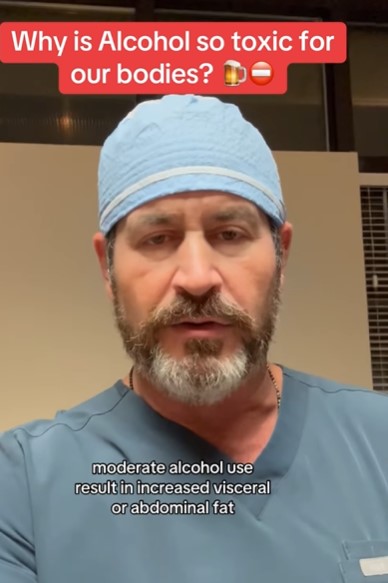
Let’s start with some simple facts. Alcohol is a toxin. Alcohol is a factor in1: 30% of suicides 40% of fatal burn injuries 50% of fatal drownings 50% of homicides 65% of fatal falls 29% of fatal road traffic accidents Globally, alcohol is responsible for 3 million deaths per year; in the United States, it is the third leading cause of preventable death23. It is hard to see the upside when you see these figures. So let’s go a little deeper. First off, I drink alcohol. Not a lot. But I do drink. So any comments made here are not some puritanical position on alcohol but reflections on the data that exist in the literature. Multiple studies have demonstrated that excess alcohol consumption, usually defined as consuming greater than 2 to 4 drinks per day, is associated with worse outcomes and a greater likelihood of dying when compared to someone who drinks less than 2 to 4 drinks per day4. Alcohol Dosing and Total Mortality in Men and Women: An Updated Meta-analysis of 34 Prospective Studies. Arch Intern Med.2006
In the study shown above, females start to accrue an increased risk at greater than two drinks per day on average and males at greater than four drinks per day.
These findings shouldn’t come as a surprise to anyone.
Surprisingly, on average, individuals who consume less than two drinks per day appear to have better outcomes than those who do not drink at all. This is where things start to get a little counterintuitive, and the story of alcohol being beneficial for you starts to appear.
This relationship is known as a ‘U’ shaped curve where those in the middle have the best outcomes, and those on the edges have worse outcomes. A kind of ‘Goldilocks’ relationship; “Not too hot. Not too cold. Just right.”
How might we explain this?
Enter the darling of the 1990s, Resveratrol. This compound in red wine spawned the mantra that red wine was ‘good for your heart’. This was based on research that suggested that it might reduce cholesterol levels, among other things.
But to consume the levels of Resveratrol tested in some of the animal studies that demonstrated benefit, you would have to drink 40 litres of wine…… Per day.
Not exactly a feasible strategy. Even with the best will in the world.
Let’s look at a more plausible explanation.
Data on alcohol consumption and outcomes are almost always based on observational data, not randomised controlled trials. This means that other factors or ‘confounders’ may explain the difference between the groups, not the alcohol consumption alone.
When you look at the trials that suggest a benefit of modest alcohol consumption, you will often find that this group tend to exercise more, smoke less, be in a higher socioeconomic bracket etc. This is referred to as a ‘healthy user bias’ and is likely to explain the difference between the groups.
Most trials try to correct or adjust for these confounders, but in truth, it is very hard to do. A recent publication looked at this problem and attempted to (as much as possible) correct for these ‘healthy user’ bias factors and then compare outcomes between alcohol consumption groups. The results were a little more in line with what we might expect.
Those in the lowest alcohol consumption category had the best lifestyle factors overall. When these healthy factors were corrected for, any benefit seen with modest alcohol consumption disappeared. What remained was a linear relationship between alcohol consumption and coronary artery disease5. Much more what you might expect.
Association of Habitual Alcohol Intake With Risk of Cardiovascular Disease. JAMA Netw Open. 2022
Research like this and other studies is where the more recent media reports of ‘any’ alcohol being bad for you have come.
So, alcohol is a toxin. But, as Paracelsus notes:
“The dose makes the poison.”
Even water consumed to excess can be lethal.
We know that excess alcohol consumption is harmful. But I don’t think there was any great uncertainty around that point.
The key takeaway is that modest alcohol consumption is unlikely to be ‘beneficial’ to you. As much as you loved the idea that red wine was good for your heart, we can say with reasonable confidence that this is not the case.
The real question we need to answer is whether consuming modest amounts of alcohol is considerably worse for you when it comes to heart disease and death from any cause.
Based on the literature to date, it seems that the incremental risk for modest amounts of weekly alcohol consumption is likely to be small. But that doesn’t mean there are no downsides.
Sleep
One of the main reasons I significantly reduced my alcohol consumption was its effect on my sleep. If I drink more than one drink, I find that the quality of my sleep gets worse. I am much more likely to wake in the middle of the night and feel the effects the following day. But that’s just my personal experience.
Although alcohol is likely to make you fall asleep faster, it impacts your sleep quality6. Additionally, alcohol also reduces the percentage of REM sleep a person gets overnight7.
A workaround for me is to consume any alcohol during the daytime, so my sleep is unlikely to be affected, and if I am going to have a drink, I make sure it is worthwhile. I.e. I am with friends, or it is a high-quality drink. No more drinks on airplanes for me. Mainly because you lose about 30% of your sense of smell and taste in a pressurised cabin and therefore you are less likely to enjoy your drink8. Why do you think they serve you tomato juice and the fact that you think it’s tolerable?!
Humans have been consuming alcohol as far back as the ancient Egyptians, and some evidence suggests the Chinese were consuming alcohol as far back as 7000 B.C. So I don’t see alcohol disappearing any time soon.
The question we all need to ask is:
How much are we realistically drinking on a daily or weekly basis &
Is it likely to be doing us harm?
Only you can answer that question.
The only way to be certain you are doing no harm is to eliminate alcohol entirely. But life is full of risks, some of which we can control, some we cannot.
And some risks are worth taking.
Want to eliminate all road traffic accidents worldwide?
Simple.
Ban cars.
But at what cost?
The risks of driving are a risk most of us are willing to take.
Mokdad, A.H.; Marks, J.S.; Stroup, D.F.; and Gerberding, J.L. Actual causes of death in the United States, 2000. JAMA 291(10):1238–1245, 2004. Erratum in JAMA 293(3):298, 2005.
Centers for Disease Control and Prevention (CDC). Alcohol and Public Health: Alcohol-Related Disease Impact (ARDI). Annual Average for United States 2011–2015 Alcohol-Attributable Deaths Due to Excessive Alcohol Use, All Ages.
Alcohol Dosing and Total Mortality in Men and Women: An Updated Meta-analysis of 34 Prospective Studies. Arch Intern Med.2006;166(22):2437–2445. doi:10.1001/archinte.166.22.2437
Biddinger KJ, Emdin CA, Haas ME, et al. Association of Habitual Alcohol Intake With Risk of Cardiovascular Disease. JAMA Netw Open. 2022;5(3):e223849. doi:10.1001/jamanetworkopen.2022.3849
Britton, A., Fat, L.N. & Neligan, A. The association between alcohol consumption and sleep disorders among older people in the general population. Sci Rep10, 5275 (2020). https://doi.org/10.1038/s41598-020-62227-0
Ebrahim IO, Shapiro CM, Williams AJ, Fenwick PB. Alcohol and sleep I: effects on normal sleep. Alcohol Clin Exp Res. 2013 Apr;37(4):539-49. doi: 10.1111/acer.12006.
Burdack-Freitag, Andrea & Bullinger, Dino & Mayer, Florian & Breuer, Klaus. (2010). Odor and taste perception at normal and low atmospheric pressure in a simulated aircraft cabin. Journal für Verbraucherschutz und Lebensmittelsicherheit. 6. 95-109. 10.1007/s00003-010-0630-y.







 Healthaware