
Yoga JournalVerified account @Yoga_Journal 2 hours ago
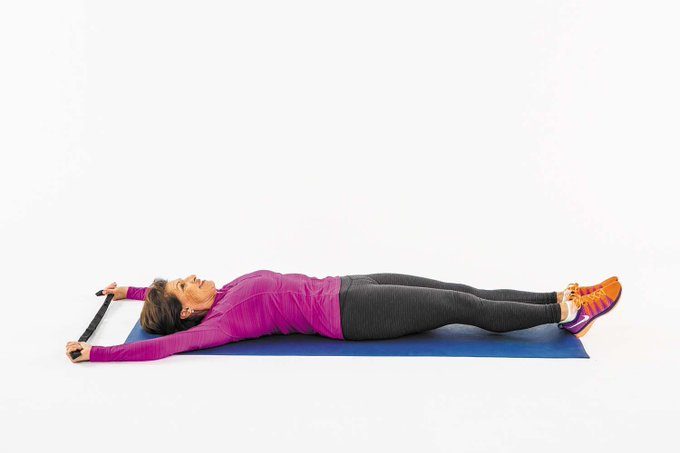
Sleep-Better Yoga: This twisting, hip-opening, feel-good flow will melt the stress of the day. #yogaforsleep #yogaforstress http://ow.ly/zOLo30jbWXP

Health is Wealth

Yoga JournalVerified account @Yoga_Journal 2 hours ago
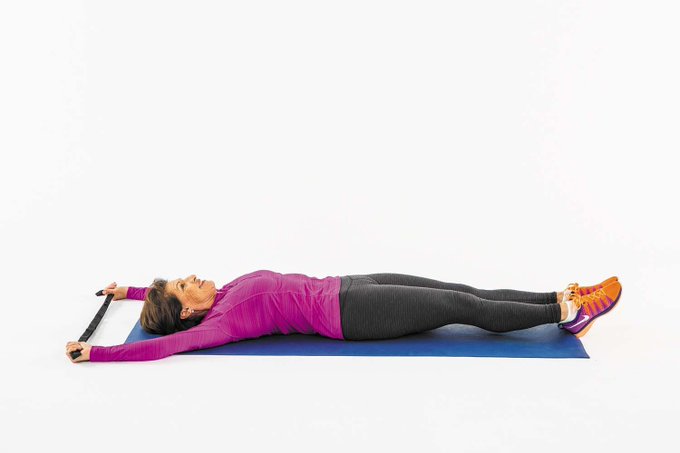
Sleep-Better Yoga: This twisting, hip-opening, feel-good flow will melt the stress of the day. #yogaforsleep #yogaforstress http://ow.ly/zOLo30jbWXP


Image: Jacob Ammentorp Lund/iStock
Many older adults focus on exercise and diet to stay healthy. But one of the worst offenders to health—poor balance—is often an afterthought. “I see a lot of older adults who are nonchalant about balance,” says Liz Moritz, a physical therapist at Harvard-affiliated Brigham and Women’s Hospital.
Unfortunately, imbalance is a common cause of falls, which send millions of people in the United States to emergency departments each year with broken hips and head injuries. But there are many things you can do to improve your balance. The strategies below are some of the most effective.
Physical therapy for balance focuses on the ability of the joints and brain to communicate, the balance system in the ear (the vestibular system), and vision. “We coordinate all three with exercises such as standing on one foot, first with the eyes open, and then with the eyes closed. We also work on joint flexibility, walking, and lower-extremity exercises on one or two legs,” says Moritz. Other exercises that boost balance include chair stands (see “Move of the month”) and squats. Make sure you get training before attempting these exercises at home.
“Core strength is very important for balance. If the abdominal muscles in your core are weak, they cannot support your limbs, especially when you’re walking. If the gluteal muscles in your buttocks and hips aren’t strong, they won’t be able to propel you forward,” says Moritz. Muscle strengthening can help. Moritz suggests starting with gentle core exercises like a pelvic tilt (lie on the floor with your knees bent up, then roll your pelvis up) and then moving to more intense exercises such as wall planks (stand six inches from a wall, keeping your body rigid, then lean forward with your forearms flat against the wall, and hold the position for 20 seconds). Leg lifts will strengthen the gluteal muscles, and adding resistance bands to leg lifts makes the exercise even more effective.
“Tai chi and yoga are exercises that make you pay attention to the control and quality of movement, rather than the quantity, which improves your balance,” says Moritz. In tai chi, you practice slow, flowing motions and shift your weight from one limb to another. Yoga incorporates a series of focused postures and breathing. Both exercises increase flexibility, range of motion, leg and core strength, and reflexes. The result: you become better at balancing in a number of different positions, which helps you avoid falling if you encounter uneven pavement or obstacles in your path.
“If you can’t see where you’re going, your fall risk goes up,” says Moritz. “A lot of people I treat for balance are here be-cause they tripped when they didn’t see something on the floor.” The fix may be as simple as a new eyeglasses prescription. Get a comprehensive, dilated eye exam every one or two years if you’re 65 or older, every one to three years if you’re age 55 to 64, and every two to four years if you’re 40 to 54. If you have an increased risk for other eye conditions, you may need an eye exam more often.
A cane or a walker can complement your balance and give you more stability and confidence walking. But don’t buy a device on your own. “If it’s too high or too low, that can cause a fall. You need to get it measured, and you need training to learn how to use it,” says Moritz. Training takes just a few physical therapy sessions. Walkers are available with wheels intended for different terrain, lockable brakes, seats, baskets, and other features such as headlights. Canes are available with various handgrips and bases.


This deliciously indulgent chocolate bark recipe offers heart-healthy dark chocolate with toasted walnuts, pecans and almonds — and no added sugar! And each serving contains only 70 calories.
Makes 35 servings
Serving = 1/2 ounce
Calories: 70
Sodium: 15 mg
Sugar: 4 g
Cholesterol: 0 mg
Saturated fat: 2 g
Fiber: 1 g
Protein: 1 g
Carbohydrate: 5 g


Learning to control stress is your best defense against these anxiety-ridden dreams
Contributors: Michelle Drerup, PsyD, DBSM and Alexa Kane, PsyD.
There are a lot of areas of sleep that science and medicine can understand and explain. But dreams are an entirely different territory, as the question ‘why we dream’ remains largely unanswered.
Vivid and frequent dreaming is often left open to interpretation through things like dream dictionaries and discussing with friends. Did that dream about your ex-boss really mean you have pent-up guilt and anxiety about your last job? Frequently having stress or anxiety-ridden dreams is usually a red flag for real life stress and the role it’s playing on your body. If you’re constantly waking up panicking in a cold sweat over a dream, it’s time to get your thoughts and stress in order.
Stress is an emotional, physical or mental tension that results from something that’s outside of us.
Some of the bigger stressors or stressful life events include moving to a new place, changing roles at school or work, relationship issues or losing a family member. Stress can cause sleep difficulties, including insomnia, by making it difficult to fall asleep and stay asleep. This impacts the quality of rest. Stress can also cause hyperarousal, which can upset the balance between sleep and wakefulness.
Being stressed is associated with poor sleep in general, and may trigger more frequent dreams. So it’s not uncommon to experience a distressing dream prior to a big event like a job interview, taking an exam or an important appointment.
And although there’s limited research about controlling the content of dreams, anxiety dreams can generally be a result of increased stress during our day-to-day lives. Daily stress can also increase the frequency of these dreams.
The good news? You have a great deal of control over your stress. If you learn to better manage stress in your life, you’ll likely decrease anxiety-ridden dreams and improve your sleep.
Here are four simple strategies to help your mind and body relax before turning in for the night:
We’ve all been there – a nightmare or stress dream causes you to wake up. The next thing you know you’re lying there overthinking your finances and everything you have to do the next day.
When this happens, what can you do to get back to sleep?
Since dreams obviously aren’t measurable, there’s no real answer to what meaning they hold in our day-to-day life. But we do know that we generally have control over daily stress, which can trigger weird or anxiety-clad dreams. Learning to control the crazy and manage your stress is your best defense to help you sleep peacefully


August 1, 2022 / Mental Health
Be honest, be safe and don’t blame yourself
It starts with a beer, a glass of wine or a cocktail. Then there’s another … and another … and another. You watch as your family member or friend slowly changes with each tip of the bottle.
It’s a routine you’ve witnessed repeatedly — and it never gets less painful to watch. So, what can you do? Addiction psychiatrist Akhil Anand, MD, offers these tips to help you persevere.
Caring about someone with an alcohol addiction can lead to worry and sleepless nights. You might spend a lot of time thinking about your actions as it relates to their addiction, says Dr. Anand.
If that describes you, take a step back. “You are not responsible for what someone else does,” reassures Dr. Anand. “It’s their decision to use alcohol. Don’t carry that weight.”
“Angry drunk” isn’t just a phrase. It’s often a reality that grows more concerning with every downed glass. Studies show that the risk of a situation turning violent is five times higher when alcohol enters the mix.
If you’re going to engage someone who’s been drinking and shown flashes of violence, don’t do it alone. Bring someone you can trust with you, advises Dr. Anand.
And if you feel threatened, call the police. “Don’t put yourself in danger,” stresses Dr. Anand.
Being close to someone addicted to alcohol can bring an immense amount of stress into your life. A lot of emotions — frustration, sadness, bitterness and more — may whirl through your mind.
Talking to an addiction counselor can help you better understand the situation and work through your feelings. Programs like Al-anon, Alateen and Families Anonymous offer opportunities for emotional support.
“Don’t forget to take care of yourself,” says Dr. Anand. “It’s not easy when your life intersects with someone dealing with an addiction. It’s important to find an outlet where you can talk about it.”
When someone gets too drunk or hungover to fulfill their basic responsibilities in life, they often rely on those around them to get the job done. And all too often, their friends and family pick up the slack.
But that attempt to be helpful can send the wrong message: “If you take care of problems for them over and over again, they never see or feel the consequences of their drinking,” explains Dr. Anand.
So, take a step back and let them deal with the after-effects of their addictive behavior.
Did a night of excessive drinking leave cans or bottles littering your living room floor? Or splatters of vomit in the bathroom? Don’t rush to clean it up. Let the person who made that mess see it.
“It’s not your duty to hide the results of their drinking so they avoid feeling any sort of embarrassment,” says Dr. Anand.
It’s natural to want someone you care about to stop drinking so heavily. Odds are, your desire is no secret, either — which is why you should be wary if that person tries to “trade” a change in addictive behavior for something.
“You cannot negotiate someone into sobriety,” says Dr. Anand. “They need to take the action — and it should not be dependent on you somehow making it worthwhile for them.”
Don’t make excuses for someone’s addiction or downplay it. “Be open and honest,” encourages Dr. Anand. “Communicate in a way that is calm and constructive but not emotional.”
Celebrate if a friend or loved one with an addiction takes a step toward rehabilitation … but don’t be surprised by a stumble. Relapse rates are common among those who seek treatment for an addiction.
An addiction is a brain disorder, after all, and not something that’s easily resolved. It can take 10 or more attempts at treatment before someone makes progress on overcoming an addiction.
“It’s best to know that going in,” says Dr. Anand, “because it’s very hard to watch it happen.”
Coping with someone addicted to alcohol isn’t easy. It can test your patience and shatter your feelings. But try to separate the person from the addiction. Do your best to understand that they’re dealing with an illness.
“Let them know that you care,” says Dr. Anand. “Offer unconditional love and give them positive affirmations. Be there for them as much as you can — but make sure you take care of yourself, too.”
To hear more from Dr. Anand on this topic, listen to the Health Essentials Podcast episode “How To Help Someone With an Alcohol Addiction.” New episodes of the Health Essentials Podcast are available every Wednesday.