

Honey is a natural sugar that can be surprisingly helpful when it comes to managing a sore throat and other cold and flu symptoms.

Sore Throat? Try Some Honey

Honey can help make a sore throat more bearable by tamping down inflammation and coating your throat

If your throat is scratchy, sore or raw, you may already have a home remedy in your pantry: honey. Honey has been used for centuries to soothe sore throats — and there’s good science behind why it works.

Family medicine specialist Elizabeth Rainbolt, MD, gives us the buzz.

How honey helps a sore throat

Honey is a natural sugar that can be surprisingly helpful when it comes to managing a sore throat and other cold and flu symptoms.

The reason why? It has to do with the nectar bees collect from plants. Nectar is sugar, but it has something going for it that your average table sugar doesn’t.

“The nectar the bees gather contains small amounts of enzymes, vitamins, minerals and more,” Dr. Rainbolt explains. “So, when bees make honey and we eat it, some of those healthy plant-based benefits make their way into our bodies.”

Honey can help soothe your sore throat in a few different ways.

Reduces inflammation

Inflammation (swelling) in your throat is part of what gives you that can’t-swallow feeling. Honey contains nutrients that may help to tamp down inflammation.

“Honey is a good source of flavonoids, which are a kind of plant chemical with anti-inflammatory properties,” Dr. Rainbolt shares.

So, when your throat is on fire, reaching for some honey can help ease swelling and give you some relief.

Fights viruses and bacteria

Another thing about those flavonoids in honey: They’re naturally anti-microbial. That means they can help your immune system fend off invaders that can get you sick, like viruses and bacteria.

Manuka honey in particular may help fight Streptococcus mutans, a common bacterium behind some throat infections.

“Manuka honey contains a unique compound called methylglyoxal, which gives it extra antibacterial power,” Dr. Rainbolt explains. “It may help reduce certain types of bacteria in the mouth and throat.”

But honey isn’t a replacement for medical care. If you’re dealing with strep throat or another bacterial infection, honey might help make your throat feel a little better — but it’s not a cure. Talk with a healthcare provider if you think your sore throat is something more serious than irritation from things like a cold or allergies.

Coats and soothes

Honey is thick and sticky, which helps coat the lining of your throat. It can act as a protective layer that can reduce irritation and make it easier to swallow.

“Think of honey like a natural cough drop,” Dr. Rainbolt says. “It forms a coating that calms the tissues in your throat and reduces that raw, scratchy feeling.”

Calms a cough

The same soothing effect that helps your sore throat can also quiet a nagging cough. In fact, research suggests honey may be more effective than over-the-counter cough suppressants, especially for nighttime symptoms.

Calming the cough means less stress on your throat — and less pain.

How to use honey for a sore throat

There are a few different ways to get your honey fix for a sore throat:

  • Swallow a teaspoon or two straight.
  • Stir it into warm water with lemon.
  • Add it to herbal tea.

“For a double-soothing effect, combine honey with warm liquids like tea or lemon water,” recommends Dr. Rainbolt. “Just avoid using boiling water — that can destroy some of honey’s beneficial properties.” Instead, let your hot water sit for a few minutes before you stir in your honey.

What kind of honey is best for a sore throat?

All honey has benefits, but some kinds pack a little more punch to knock out a sore throat:

  • Raw honey is the least processed, so it’s more likely to retain more antioxidants.
  • Manuka honey is rich in antibacterial, antiviral and antifungal properties.
  • Darker-colored honey tends to have less added water, so the benefits can be more concentrated.

“If the honey is crystal-clear, it’s likely been highly processed,” says Dr. Rainbolt. “Look for raw, dark, or cloudy honey to get the most health benefits.”

What else to consider

Honey is a natural remedy for sore throats. But natural doesn’t mean without risks. Keep these things in mind:

  • Never give honey to children under 1. Honey can carry bacteria that cause infant botulism, a rare but serious illness.
  • Watch the sugar. Honey is still a form of sugar, so use it in moderation — especially if you have diabetes or are watching your intake.
  • Read the label. Clear or blended honeys are often more processed and may contain added sweeteners like corn syrup, which limit their effectiveness.

When used properly, honey might help ease a sore throat and deliver an antibacterial and anti-inflammatory boost, especially when used in combination with other home remedies.

But it’s not a magic elixir. If you think it could be strep throat or have other troubling symptoms, talk with a healthcare provider.

Fish is packed with lean protein, but its biggest nutritional advantage is omega-3 fatty acids. @ClevelandClinic

August 24, 2026/Diet, Food & Fitness/Nutrition

Best Catch: The Healthiest Fish To Eat

The best choices are high in omega-3s and protein and low in mercury

Fish has earned its reputation as one of the healthiest proteins you can put on your plate. But with so many options in the seafood case, it can be hard to know which ones deserve a spot in your shopping cart.

“It can get overwhelming sometimes with so many choices,” says registered dietitian Julia Zumpano, RD, LD. “The key is choosing fish that give you the most nutritional benefit while limiting your mercury exposure.”

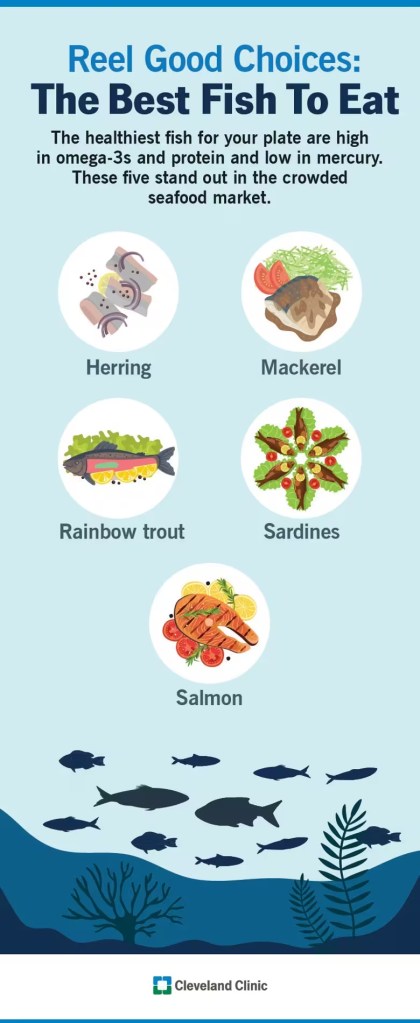
The 5 best fish to eat

Fish is packed with lean protein, but its biggest nutritional advantage is omega-3 fatty acids. These healthy fats can help support heart and brain health and lower inflammation, among other benefits.

Zumpano’s top choices for fish are all high in omega-3s and protein, as well as other vitamins and nutrients.

They’re also low in mercury, a toxic metal that brings health concerns in high amounts.

Here are five fish choices to search out at the market.

1. Sardines

Don’t let their tiny size fool you: “Sardines offer big health benefits,” says Zumpano.

A 3-ounce serving provides about 2 grams of omega-3 fatty acids — one of the highest amounts of any fish. They’re also a good source of calcium and vitamin D, essential nutrients your body needs to work right.

Another perk? They’re inexpensive and easy to keep on hand. You can buy sardines packed in olive oil or tomato sauce and add them to:

  • Salads
  • Pasta dishes
  • Grain bowls
  • Toast

If you’re watching your sodium intake, compare nutrition labels and choose lower-sodium varieties when possible.

2. Herring

Herring is another oily fish loaded with omega-3s. While it contains slightly less omega-3 than sardines, herring still delivers plenty of heart-healthy fats. It’s also swimming in vitamin B12 and vitamin D.

Depending on your preferences, herring can be eaten:

  • Cooked fresh
  • Smoked
  • Pickled
  • Canned

“Herring has a stronger, fishier flavor because it’s rich in those healthy oils,” Zumpano notes. “If you’re trying it for the first time, using mustard and dill is a traditional preparation that’s a great place to start.”

3. Mackerel

Mackerel is another excellent source of omega-3s and lean protein, but there’s one important catch: Not all mackerel is created equal.

It’s best to choose the smaller Atlantic or Spanish mackerel, which are relatively low in mercury, clarifies Zumpano. And pass on king mackerel, a larger predator fish that contains much higher mercury levels.

Mackerel is tasty grilled, baked or poached. The fish pairs well with vegetables, salads and whole grains for a balanced meal.

4. Salmon

No list of healthy fish would be complete without salmon. Popular with diners for its rich and meaty texture, salmon is another excellent source of protein, omega-3 fatty acids and key vitamins.

When it comes to nutritional value, wild salmon holds a slight edge over responsibly raised farmed salmon, notes Zumpano. But both are excellent choices.

“If you have the opportunity to choose wild Pacific salmon, it’s a great option,” she adds. “But don’t be afraid to eat farm-raised Atlantic salmon if that’s what’s available or fits your budget.”

5. Rainbow trout

Rainbow trout is another option in the seafood case that checks a lot of good-for-your-health boxes. It’s rich in lean protein and omega-3 fatty acids while also providing important key vitamins and nutrients.

“Rainbow trout has a mild flavor and soft texture, too, so it’s easy to work into meals,” says Zumpano. Try it baked, grilled or pan-seared. It goes nicely with veggies, salads or whole grains for a balanced plate.

Fish to limit

No fish is completely “bad” for you, given the protein and other nutrients they offer. But some are worth eating less often because they’re lower in omega-3s or potentially higher in mercury or other contaminants.

This list includes:

  • Tilapia: While tilapia is a lean source of protein, it lacks the omega-3 content of other fish. “Most people don’t get enough omega-3s in their diet, so if you’re going to enjoy fish, try to choose fish that are highest in that nutrient,” suggests Zumpano.
  • Tuna: Both fresh and canned tuna provide protein and omega-3s. The concern is mercury. Larger fish tend to accumulate more mercury over time, so Zumpano recommends limiting tuna to about 6 ounces per week. If you buy canned tuna, chunk light varieties generally contain less mercury than albacore.
  • Imported catfish: Most catfish sold in the United States is imported, which brings concerns about potential contaminants, cautions Zumpano. If catfish is a favorite, look for farm-raised fish from the U.S.
  • Larger fish: Mercury concerns typically rise with the size of the fish. The reason? Big fish (like marlin, shark and swordfish) eat smaller fish and absorb the mercury that accumulates in their bodies over time.

Final thoughts

While fish consumption in the United States has risen in recent years, most Americans still don’t eat from the seas often enough, says Zumpano. That adds up to a lot of people missing out on an important source of omega-3 fatty acids.

In general, health experts recommend that adults eat two 4-ounce servings of fish per week as part of a healthy and balanced diet. (Pregnant or breastfeeding women should limit it to one serving per week, given the mentioned mercury concerns.)

Zumpano recommends adding a variety of seafood to your meals. If you’re looking for choices other than the fish cited here, check out the “best choices” list put together by the U.S. Food and Drug Administration (FDA).

“Fish is one of the healthiest sources of protein you can eat,” reiterates Zumpano. “When you choose fish that’s high in omega-3s and lower in mercury, you’re getting the greatest nutritional benefit.”

High temperature,infections widespread at this time of year @ClevelandClinic #childtherapy

We all want to protect our kids whether it be from falls, bumps and bruises — or avoidable infections and diseases. To help your child avoid illness, it’s important to encourage good habits and take steps to boost their immune system from an early age.

“Most of what makes a child’s immune system strong is common sense,” says pediatrician Adriane Lioudis, MD. If you keep these five tips in mind, you’ll stack the deck in your child’s favor for a healthier life.

1. For newborns, consider breastfeeding

While it’s a very personal decision (that isn’t always possible), if you are able to exclusively breastfeed your child for at least six months, it may have benefits. Some research shows that breastfeeding your child might possibly reduce allergies, Dr. Lioudis says.

2. Promote regular hand washing

Eighty percent of infections are spread by touch. Teach your little one to take the time to wash their hands after sneezing, coughing and going to the bathroom. Washing hands with warm water and soap for at least 20 seconds can remove bacteria and viruses and can reduce the chance of lung infections by up to 45%.

3. Don’t skip immunizations

Follow your pediatrician’s advice when it comes to the childhood vaccination schedule. Immunizations start in infancy and continue to adulthood and prevent measles, mumps, chickenpox, rotavirus and other infections.

“Get the flu shot for your child yearly, as well,” Dr. Lioudis says. This is particularly important for children with asthma and other chronic health conditions.

Also, if your family will be traveling internationally, it’s important to seek advice from your child’s healthcare provider about any needed vaccinations.

4. Make sleep a priority

To maximize immunity, children must get enough sleep.

Sleep requirements for each night vary by age:

  • Babies between 0 and 3 months need 14 to 17 hours of sleep. Those between 4 and 12 months need 12 to 16 hours of sleep.
  • Children between the ages of 1 and 2 need between 11 and 14 hours.
  • Kids between the ages of 3 and 5 should get from10 to 13 hours.
  • Children ages 6 to 12 should get between 9 and 12 hours.
  • Teens between the ages of 13 to 18 need 8 to 10 hours.

Not getting enough sleep limits the body’s ability to produce proteins called cytokines that help fight infection and reduce inflammation.

5. Encourage a healthy diet

A healthy diet is also important for your child’s immune system.

Dr. Lioudis recommends encouraging your child to “eat the rainbow” when it comes to fruits and vegetables. A good selection of whole grains should be part of their diet as well. Keep processed foods to a minimum. Proper food choices can help ensure that your child gets enough vitamins — such as vitamin A and E. These vitamins are needed to maintain good health and a strong immune system.

You can’t avoid all illness, but some kids need extra protection

“Even if you follow these tips, your child might still get between seven and 11 colds each year,” says Dr. Lioudis. She adds that you can expect each one to last up to two weeks.

Also, keep in mind that some things billed as common “remedies” aren’t effective in boosting immunity. For example, there’s no definitive proof that large amounts of vitamin C or echinacea help prevent colds or shorten them, she says.

However, if your child has a compromised immune system, work closely with your pediatrician to find ways to improve his or her immunity. Each child needs a personalized approach because their individual immune system varies, Dr. Lioudis says.

“There’s generally a different protocol with immunocompromised children. There are some vaccines we have to add in on top of what most children have, but it’s something that we must determine on a case-by-case basis.

5 Ways to Boost Your Child’s Immune System for Life @ClevelandClinic Adriane Lioudis, MD.

We all want to protect our kids whether it be from falls, bumps and bruises — or avoidable infections and diseases. To help your child avoid illness, it’s important to encourage good habits and take steps to boost their immune system from an early age.

“Most of what makes a child’s immune system strong is common sense,” says pediatrician Adriane Lioudis, MD. If you keep these five tips in mind, you’ll stack the deck in your child’s favor for a healthier life.

1. For newborns, consider breastfeeding

While it’s a very personal decision (that isn’t always possible), if you are able to exclusively breastfeed your child for at least six months, it may have benefits. Some research shows that breastfeeding your child might possibly reduce allergies, Dr. Lioudis says.

2. Promote regular hand washing

Eighty percent of infections are spread by touch. Teach your little one to take the time to wash their hands after sneezing, coughing and going to the bathroom. Washing hands with warm water and soap for at least 20 seconds can remove bacteria and viruses and can reduce the chance of lung infections by up to 45%.

3. Don’t skip immunizations

Follow your pediatrician’s advice when it comes to the childhood vaccination schedule. Immunizations start in infancy and continue to adulthood and prevent measles, mumps, chickenpox, rotavirus and other infections.

“Get the flu shot for your child yearly, as well,” Dr. Lioudis says. This is particularly important for children with asthma and other chronic health conditions.

Also, if your family will be traveling internationally, it’s important to seek advice from your child’s healthcare provider about any needed vaccinations.

4. Make sleep a priority

To maximize immunity, children must get enough sleep.

Sleep requirements for each night vary by age:

  • Babies between 0 and 3 months need 14 to 17 hours of sleep. Those between 4 and 12 months need 12 to 16 hours of sleep.
  • Children between the ages of 1 and 2 need between 11 and 14 hours.
  • Kids between the ages of 3 and 5 should get from10 to 13 hours.
  • Children ages 6 to 12 should get between 9 and 12 hours.
  • Teens between the ages of 13 to 18 need 8 to 10 hours.

Not getting enough sleep limits the body’s ability to produce proteins called cytokines that help fight infection and reduce inflammation.

5. Encourage a healthy diet

A healthy diet is also important for your child’s immune system.

Dr. Lioudis recommends encouraging your child to “eat the rainbow” when it comes to fruits and vegetables. A good selection of whole grains should be part of their diet as well. Keep processed foods to a minimum. Proper food choices can help ensure that your child gets enough vitamins — such as vitamin A and E. These vitamins are needed to maintain good health and a strong immune system.

You can’t avoid all illness, but some kids need extra protection

“Even if you follow these tips, your child might still get between seven and 11 colds each year,” says Dr. Lioudis. She adds that you can expect each one to last up to two weeks.

Also, keep in mind that some things billed as common “remedies” aren’t effective in boosting immunity. For example, there’s no definitive proof that large amounts of vitamin C or echinacea help prevent colds or shorten them, she says.

However, if your child has a compromised immune system, work closely with your pediatrician to find ways to improve his or her immunity. Each child needs a personalized approach because their individual immune system varies, Dr. Lioudis says.

“There’s generally a different protocol with immunocompromised children. There are some vaccines we have to add in on top of what most children have, but it’s something that we must determine on a case-by-case basis.

Colorful fruits and vegetables are packed with phytonutrients that help calm inflammation @MayoClinic 🌈 🏳️‍🌈 🌈

Can eating the rainbow help to reduce inflammation?

11/6/2025 by Tamara Soerense

nFruitRainbow

Inflammation is a natural process initiated by the immune system in response to illness, trauma, toxins, physical stress and chronic disease. While acute inflammation is protective and allows our bodies to heal, it can become harmful if it persists, leading to chronic inflammation. Chronic inflammation, in turn, can lead to conditions such as arthritis, heart disease, and diabetes.

Several foods can contribute to inflammation. These include highly processed foods, refined carbohydrates, or foods high in added sugars. Conversely, other foods can help calm the immune system, decreasing inflammation.

Let’s explore which foods help lower inflammation and how they can be incorporated into an anti-inflammatory diet.

  • Fruits and Vegetables: Colorful fruits and vegetables naturally contain various phytonutrients and bioactive compounds that help keep inflammation in check. These foods form the foundation of the anti-inflammatory diet and can be enjoyed in abundance. For an extra boost of protection, try drizzling antioxidant-rich olive oil on your veggies..
  • Protein: Choose primarily from plant-based sources such as legumes, soy, nuts, and seeds, with smaller amounts from lean cuts of animal protein and fatty fish. The fats in these proteins, mainly monounsaturated and omega-3, play a significant role in combating inflammation. The American Heart Association recommends 6 to 8 ounces of fatty fish and 5 ounces of legumes, nuts, and seeds per week.
  • Whole grains: Whole grains contain all parts of the grain, whereas refined grains remove the germ and bran, eliminating important inflammation-reducing compounds. Of these, fiber is a bit of a superstar, shown to help reduce blood sugar and cholesterol levels. Aim for at least 50% of your grains from whole grain sources, such as rolled oats and brown rice.
  • Herbs and Spices: Herbs and spices add flavor to your food and help reduce oxidative stress, which can trigger inflammation. Add ginger, turmeric, clove, cinnamon, oregano, and garlic to your next meal.

What change can you make today to shift your body into a less inflamed state?

Consider adding one colorful fruit or vegetable to your diet each day. Suggestions include tomatoes, oranges, yellow bell peppers, arugula, blueberries, pumpkin and broccoli.

Tamara Soerensen completed her bachelor’s degree in biology at the University of California, Santa Barbara and her master’s in nutrition at Bastyr University. She is currently a dietetic intern at Mayo Clinic in Rochester, Minnesota. Special interests include digestive health and the utilization of diet for disease prevention.

Recipe: Blueberry-Walnut Pancakes #ClevelandClinic

Grain-free, sugar-free and dairy-free

Do you miss seeing a stack of pancakes on the brunch table? Now you don’t have to. These grain-free, sugar-free, dairy-free pancakes are the perfect guilt-free treat. They’re easy to make, and the whole family will love them. Yum!

Ingredients

3 large omega-3 eggs
¾ cup almond milk
½ tablespoon freshly squeezed lemon juice
1 teaspoon pure vanilla extract
½ cup coconut flour
½ teaspoon baking powder
½ teaspoon baking soda
Pinch of sea salt
¼ cup roughly chopped walnuts
coconut oil, for greasing the skillet (about ¼ cup)
1 pint fresh blueberries
½ cup arrowroot
1 teaspoon cinnamon

Directions

  1. In a large bowl, whisk the eggs and then add the almond milk, lemon juice, and vanilla. Whisk until well-blended. In a separate bowl, mix together the coconut flour, cinnamon, baking powder, baking soda, salt and arrowroot. Add the dry ingredients to the wet mixture, ¼ cup at a time, while continuously whisking. Once combined, gently fold in the walnuts.
  2. Grease a large skillet and place over medium heat. Once the skillet is hot, use a ladle to pour 3-inch pancakes onto the skillet. Cook until bubbles appear, then flip. The pancake should cook on each side for about 2-3 minutes. Repeat with rest of the batter. Add a tablespoon or more of coconut oil to the hot griddle, as needed.
  3. Make a blueberry sauce by simmering the blueberries in a small saucepan with 2 tablespoons of water for 10 minutes before serving.
  4. To serve, place 3 pancakes on a plate and top each stack with the blueberry sauce.

Nutritional information (per serving)

Makes 2-3 servings.

Calories 423
Total Fat 19 g
Protein 12 g
Fiber 14 g
Sugar 14 g
Sodium 416 mg

— Recipe courtesy of Mark Hyman, MD 

5 Ways to Boost Your Child’s Immune System for Life @ClevelandClinic Adriane Lioudis, MD.

We all want to protect our kids whether it be from falls, bumps and bruises — or avoidable infections and diseases. To help your child avoid illness, it’s important to encourage good habits and take steps to boost their immune system from an early age.

“Most of what makes a child’s immune system strong is common sense,” says pediatrician Adriane Lioudis, MD. If you keep these five tips in mind, you’ll stack the deck in your child’s favor for a healthier life.

1. For newborns, consider breastfeeding

While it’s a very personal decision (that isn’t always possible), if you are able to exclusively breastfeed your child for at least six months, it may have benefits. Some research shows that breastfeeding your child might possibly reduce allergies, Dr. Lioudis says.

2. Promote regular hand washing

Eighty percent of infections are spread by touch. Teach your little one to take the time to wash their hands after sneezing, coughing and going to the bathroom. Washing hands with warm water and soap for at least 20 seconds can remove bacteria and viruses and can reduce the chance of lung infections by up to 45%.

3. Don’t skip immunizations

Follow your pediatrician’s advice when it comes to the childhood vaccination schedule. Immunizations start in infancy and continue to adulthood and prevent measles, mumps, chickenpox, rotavirus and other infections.

“Get the flu shot for your child yearly, as well,” Dr. Lioudis says. This is particularly important for children with asthma and other chronic health conditions.

Also, if your family will be traveling internationally, it’s important to seek advice from your child’s healthcare provider about any needed vaccinations.

4. Make sleep a priority

To maximize immunity, children must get enough sleep.

Sleep requirements for each night vary by age:

  • Babies between 0 and 3 months need 14 to 17 hours of sleep. Those between 4 and 12 months need 12 to 16 hours of sleep.
  • Children between the ages of 1 and 2 need between 11 and 14 hours.
  • Kids between the ages of 3 and 5 should get from10 to 13 hours.
  • Children ages 6 to 12 should get between 9 and 12 hours.
  • Teens between the ages of 13 to 18 need 8 to 10 hours.

Not getting enough sleep limits the body’s ability to produce proteins called cytokines that help fight infection and reduce inflammation.

5. Encourage a healthy diet

A healthy diet is also important for your child’s immune system.

Dr. Lioudis recommends encouraging your child to “eat the rainbow” when it comes to fruits and vegetables. A good selection of whole grains should be part of their diet as well. Keep processed foods to a minimum. Proper food choices can help ensure that your child gets enough vitamins — such as vitamin A and E. These vitamins are needed to maintain good health and a strong immune system.

You can’t avoid all illness, but some kids need extra protection

“Even if you follow these tips, your child might still get between seven and 11 colds each year,” says Dr. Lioudis. She adds that you can expect each one to last up to two weeks.

Also, keep in mind that some things billed as common “remedies” aren’t effective in boosting immunity. For example, there’s no definitive proof that large amounts of vitamin C or echinacea help prevent colds or shorten them, she says.

However, if your child has a compromised immune system, work closely with your pediatrician to find ways to improve his or her immunity. Each child needs a personalized approach because their individual immune system varies, Dr. Lioudis says.

“There’s generally a different protocol with immunocompromised children. There are some vaccines we have to add in on top of what most children have, but it’s something that we must determine on a case-by-case basis.

Colorful fruits and vegetables are packed with phytonutrients that help calm inflammation @MayoClinic 🌈 🏳️‍🌈 🌈

Can eating the rainbow help to reduce inflammation?

11/6/2025 by Tamara Soerense

nFruitRainbow

Inflammation is a natural process initiated by the immune system in response to illness, trauma, toxins, physical stress and chronic disease. While acute inflammation is protective and allows our bodies to heal, it can become harmful if it persists, leading to chronic inflammation. Chronic inflammation, in turn, can lead to conditions such as arthritis, heart disease, and diabetes.

Several foods can contribute to inflammation. These include highly processed foods, refined carbohydrates, or foods high in added sugars. Conversely, other foods can help calm the immune system, decreasing inflammation.

Let’s explore which foods help lower inflammation and how they can be incorporated into an anti-inflammatory diet.

  • Fruits and Vegetables: Colorful fruits and vegetables naturally contain various phytonutrients and bioactive compounds that help keep inflammation in check. These foods form the foundation of the anti-inflammatory diet and can be enjoyed in abundance. For an extra boost of protection, try drizzling antioxidant-rich olive oil on your veggies..
  • Protein: Choose primarily from plant-based sources such as legumes, soy, nuts, and seeds, with smaller amounts from lean cuts of animal protein and fatty fish. The fats in these proteins, mainly monounsaturated and omega-3, play a significant role in combating inflammation. The American Heart Association recommends 6 to 8 ounces of fatty fish and 5 ounces of legumes, nuts, and seeds per week.
  • Whole grains: Whole grains contain all parts of the grain, whereas refined grains remove the germ and bran, eliminating important inflammation-reducing compounds. Of these, fiber is a bit of a superstar, shown to help reduce blood sugar and cholesterol levels. Aim for at least 50% of your grains from whole grain sources, such as rolled oats and brown rice.
  • Herbs and Spices: Herbs and spices add flavor to your food and help reduce oxidative stress, which can trigger inflammation. Add ginger, turmeric, clove, cinnamon, oregano, and garlic to your next meal.

What change can you make today to shift your body into a less inflamed state?

Consider adding one colorful fruit or vegetable to your diet each day. Suggestions include tomatoes, oranges, yellow bell peppers, arugula, blueberries, pumpkin and broccoli.

Tamara Soerensen completed her bachelor’s degree in biology at the University of California, Santa Barbara and her master’s in nutrition at Bastyr University. She is currently a dietetic intern at Mayo Clinic in Rochester, Minnesota. Special interests include digestive health and the utilization of diet for disease prevention.

5 Ways to Boost Your Child’s Immune System for Life @ClevelandClinic Adriane Lioudis, MD.

We all want to protect our kids whether it be from falls, bumps and bruises — or avoidable infections and diseases. To help your child avoid illness, it’s important to encourage good habits and take steps to boost their immune system from an early age.

“Most of what makes a child’s immune system strong is common sense,” says pediatrician Adriane Lioudis, MD. If you keep these five tips in mind, you’ll stack the deck in your child’s favor for a healthier life.

1. For newborns, consider breastfeeding

While it’s a very personal decision (that isn’t always possible), if you are able to exclusively breastfeed your child for at least six months, it may have benefits. Some research shows that breastfeeding your child might possibly reduce allergies, Dr. Lioudis says.

2. Promote regular hand washing

Eighty percent of infections are spread by touch. Teach your little one to take the time to wash their hands after sneezing, coughing and going to the bathroom. Washing hands with warm water and soap for at least 20 seconds can remove bacteria and viruses and can reduce the chance of lung infections by up to 45%.

3. Don’t skip immunizations

Follow your pediatrician’s advice when it comes to the childhood vaccination schedule. Immunizations start in infancy and continue to adulthood and prevent measles, mumps, chickenpox, rotavirus and other infections.

“Get the flu shot for your child yearly, as well,” Dr. Lioudis says. This is particularly important for children with asthma and other chronic health conditions.

Also, if your family will be traveling internationally, it’s important to seek advice from your child’s healthcare provider about any needed vaccinations.

4. Make sleep a priority

To maximize immunity, children must get enough sleep.

Sleep requirements for each night vary by age:

  • Babies between 0 and 3 months need 14 to 17 hours of sleep. Those between 4 and 12 months need 12 to 16 hours of sleep.
  • Children between the ages of 1 and 2 need between 11 and 14 hours.
  • Kids between the ages of 3 and 5 should get from10 to 13 hours.
  • Children ages 6 to 12 should get between 9 and 12 hours.
  • Teens between the ages of 13 to 18 need 8 to 10 hours.

Not getting enough sleep limits the body’s ability to produce proteins called cytokines that help fight infection and reduce inflammation.

5. Encourage a healthy diet

A healthy diet is also important for your child’s immune system.

Dr. Lioudis recommends encouraging your child to “eat the rainbow” when it comes to fruits and vegetables. A good selection of whole grains should be part of their diet as well. Keep processed foods to a minimum. Proper food choices can help ensure that your child gets enough vitamins — such as vitamin A and E. These vitamins are needed to maintain good health and a strong immune system.

You can’t avoid all illness, but some kids need extra protection

“Even if you follow these tips, your child might still get between seven and 11 colds each year,” says Dr. Lioudis. She adds that you can expect each one to last up to two weeks.

Also, keep in mind that some things billed as common “remedies” aren’t effective in boosting immunity. For example, there’s no definitive proof that large amounts of vitamin C or echinacea help prevent colds or shorten them, she says.

However, if your child has a compromised immune system, work closely with your pediatrician to find ways to improve his or her immunity. Each child needs a personalized approach because their individual immune system varies, Dr. Lioudis says.

“There’s generally a different protocol with immunocompromised children. There are some vaccines we have to add in on top of what most children have, but it’s something that we must determine on a case-by-case basis.

Does honey work to soothe a sore throat and cough? Yes, says family medicine physician Elizabeth Rainbolt, MD.@ClevelandClinic 🍯

Honey for Your Sore Throat and Cough

The natural at-home remedy can soothe irritation and decrease inflammation

It feels faint at first — there’s a little tickle or scratch at the back of your throat.

Then, it hurts or even burns when you swallow.

Ugh, you’ve got a sore throat, and a cough isn’t far behind.

You’re taking cough syrup and lozenges in an attempt to get some relief. But what about using honey for sore throat symptoms? Does this natural home remedy actually work to soothe a sore throat and cough?

Yes, says family medicine physician Elizabeth Rainbolt, MD.

Dr. Rainbolt explains how honey works and when and how to use it.

Honey for a sore throat

It’s common to get a sore throat every now and then. You may have a sore throat due to the following:

In addition to having other symptoms like nasal congestion, fatigue and fever, you may develop a cough.

Honey has a long history of being used as a natural remedy. And one remedy is to soothe sore throats and help alleviate a cough.

“Research shows that honey has some antimicrobial and anti-inflammation properties. Honey can help by decreasing inflammation and irritation in your throat,” explains Dr. Rainbolt. “Another study shows that honey may reduce mucus secretion. So, you can use honey for cough symptoms as well, whether it’s a wet or dry cough.”

Is it safe for children?

Giving honey to a child under 1-year-old isn’t recommended, warns Dr. Rainbolt.

“There’s concern for an infant botulism, a serious illness that’s caused by Clostridium botulinum,” she continues. “While it’s a rare occurrence, honey can contain spores that cause botulism. It attacks the body’s nervous system and children under one are more vulnerable.”

How to use for a sore throat

Most sore throats tend to get better within a week, but during that time, adults can take a spoonful (about 1 teaspoon) of honey for a cough and sore throat.

You can also dilute half a teaspoon to 1 teaspoon of honey in warm water or tea. This method is also recommended for children older than 1.

“You can use it with any kind of herbal tea or warm water with lemon juice, which can be soothing as well,” says Dr. Rainbolt.

So, how often can you use this home remedy? Dr. Rainbolt recommends using honey no more than four or five times a day.

And part of that reasoning is that honey does contain sugar.

“If you’re concerned about your sugar intake, then I recommend using honey more sparingly,” she says. “I would just use it at night to give you some relief before you go to bed.”

And can you use both honey and traditional cold medicine?

Yes, says Dr. Rainbolt.

“If it seems like the honey isn’t helping on its own, then you can certainly do both honey and medication, if medicine is something that you are able to take,” she notes.

Is honey safe to use?

Honey can be a helpful tool for those who can’t take traditional cold medications — for example, children under 6 years old or individuals with health conditions like high blood pressure or cardiovascular disease.

Overall, honey can be a good way to help soothe your sore throat and cough. It doesn’t come with some of the side effects that over-the-counter medications have like drowsiness.

So, can you just buy any honey you see on the grocery store shelf?

Yes, but you might want to make sure it’s been pasteurized. The pasteurization process removes any crystallization and unwanted yeast. It also improves honey’s texture and color, while extending its shelf life.

Dr. Rainbolt also mentions that some people think using local honey, which tends to be unpasteurized or raw, can come with extra benefits.

“There’s a thought that if you use local honey, you are exposed to some of the area’s natural allergens in a positive way,” she explains. “The idea is that it will help with allergies you have.”

The next time your throat starts to tickle, reach for honey and see if it helps.

“Think of honey as a first line of defense for those over 1 year old,” says Dr. Rainbolt. “Honey is something that pretty much everyone can try. And it’s been shown to work as well as some cough suppressant medications. It’s a nice alternative.”