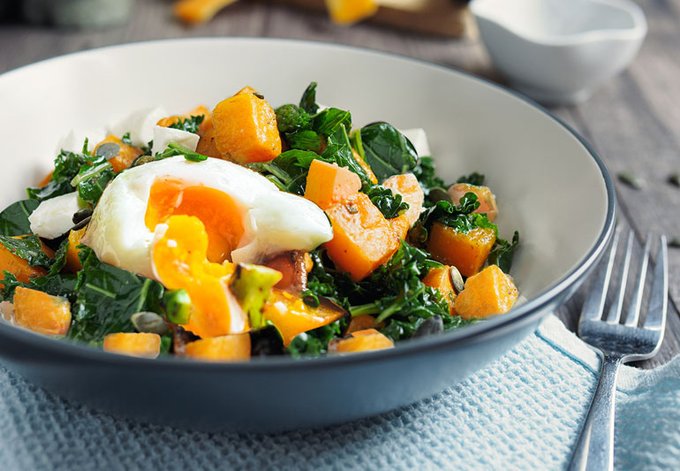
Recipe: Sauteed Veggies with Avocado & Poached Eggs
Cleveland Clinic
@ClevelandClinic
·
Eggs and greens are a perfect combo. Try this recipe any time of day:

Health is Wealth
Recipe: Sauteed Veggies with Avocado & Poached Eggs

This bright, lemony salad is best made with farm-fresh asparagus, which is dressed and eaten raw here. Look for stalks that are bright green with firm, tight tips. Buy it in season from your local farmer’s market.
1 pound fresh asparagus
1 tablespoon fresh lemon juice
1 tablespoon extra virgin olive oil
1/8 teaspoon kosher salt
1/8 teaspoon freshly ground black pepper
1 tablespoon shaved Parmesan
8 fresh chives
Makes 4 servings
Calories: 70
Total fat: 4 g
Saturated fat: 1 g
Trans fat: 0 g
Protein: 4 g
Total carbohydrate: 7 g
Fiber: 3 g
Sugar: 2 g
Cholesterol: 0 mg
Sodium: 95 mg
— Developed by Sara Quessenberry for Cleveland Clinic Wellness.
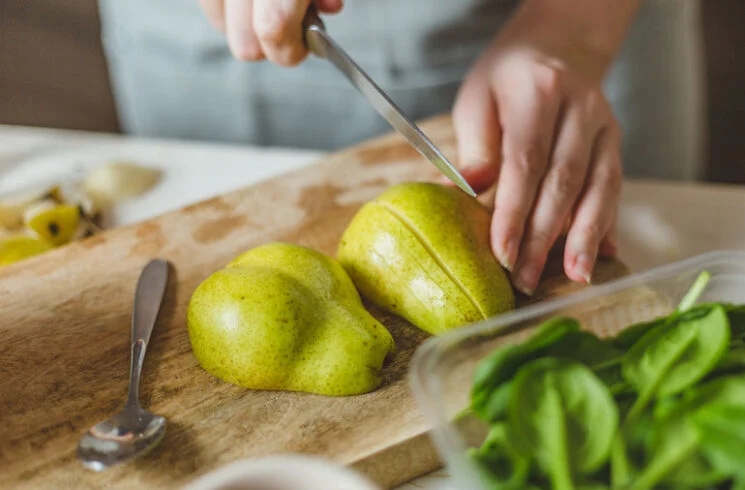
Ironically, not every pear is “pear-shaped.” One variety, Asian pears, is actually shaped like an apple. But no matter their shape, all pears are rich in disease-fighting nutrients.
“Pears are so healthy, and most people tolerate them very well,” says registered dietitian Beth Czerwony, RD, LD. “They’re terrific for your digestion and have other impressive health benefits. They’re a perfect snack if you’re craving something sweet.”
Pears are members of the Rosaceae plant family, along with apples, apricots, cherries, peaches and several other fruits and berries. Pears can range in texture, color, crispness, juiciness and sweetness. Common varieties you may find in the grocery store include:
Are pears good for you? Absolutely. Pears are a great source of antioxidants, fiber, potassium and vitamin C. But they’re not just full of nutrients — they also may lower your risk of some diseases. Here are five ways pears boost your health.
Like most fruit, pears are a source of good nutrition. One medium pear has approximately:
A medium pear also gives you:
Nobody enjoys the dreaded crash that happens after sugary foods spike your blood glucose. Steady blood sugar means a steady supply of energy, which is healthier for your body. Blood sugar management is even more important if you have diabetes.
Czerwony says pears may help stabilize blood sugar and even reduce your risk of Type 2 diabetes. How? Fiber, for starters. A medium pear offers nearly one-quarter of the fiber you need in a day. Fiber helps keep blood sugar steadier by slowing your body’s absorption of sugar.
Pears also contain anthocyanin, an antioxidant. An observational study suggests a link between eating anthocyanin-rich foods and a lower risk of Type 2 diabetes.
Another study showed that eating pears could significantly lower your odds of developing Type 2 diabetes. For each serving of pears eaten per week, researchers found a 3% lower risk of Type 2 diabetes.
In addition, pears are a low-glycemic food, which means they won’t spike your blood sugar like sugary foods and some fruits can.
Fiber adds bulk to and softens your stool, which helps things move along in your gut. Lots of foods contain fiber, but pears are a particularly excellent source.
A single pear contains 6 grams of fiber (more than 20% of what an adult needs in a day). And pectin, a type of fiber in pears, has some specific benefits. Pectin is a soluble fiber known to help:
To reap the fibrous benefit of pears, don’t skip the skin. “Pear skin contains a significant amount of the fruit’s total fiber content,” notes Czerwony.
Inflammation happens when your immune system tries to protect you from something — an infection, a toxin or some other offender. Some temporary inflammation is actually a healthy response to these things. But when inflammation hangs around, it can contribute to diseases such as Alzheimer’s, asthma, cancer and Type 2 diabetes.
Antioxidants are nutrients that can prevent some of the cell damage that leads to inflammation. Pears are rich in powerful types of antioxidants called flavonoids.
Research shows that flavonoids can reduce inflammation and lower the risk of:
Pears are an excellent part of a heart-healthy diet. Nutrients in pears that can benefit your heart include:
In addition, a study examining the effects of fruit and vegetable consumption suggests eating pears lowers your risk of stroke. And one large clinical trial showed a link between eating pears and a lower risk of dying from heart disease.
“In general, fresh fruits are best because they have the highest amount of nutrients,” explains Czerwony. “Frozen is usually a close second to fresh. The heat of canning, though, can break down certain nutrients.”
But don’t avoid canned pears completely. They’re still good for you. She advises looking for pears in water rather than syrup, which adds unneeded sugar.
“You might be surprised by what you can do with fresh pears,” she adds. “Think of how you use apples — sliced raw, in pies or baked — and you can do all those things with pears.”
Try making this poached pear dessert, include pears in your stuffing or make some interesting salads with pears.

Cucumbers are abundant in silica, too, a trace mineral that may actually increase skin elasticity and help keep you looking young.
1 tablespoon rice wine vinegar
1 teaspoon olive oil
1/2 teaspoon toasted sesame oil
1/2 teaspoon soy sauce
Dash cayenne pepper
2 cucumbers, cut into 1/4-inch-thick slices
1/2 bunch chives, minced
1 teaspoon sesame seeds
Makes 2 servings
Calories: 100
Total fat: 4.5 g
Saturated fat: .5 g
Cholesterol: 0 mg
Sodium: 105 mg
Fiber: 3 g
Carbohydrate: 12 g
Sugar: 8 g
Protein: 4 g

Registered dietitian Lara Whitson, RD, LD, shares how watermelon is actually healthy for you, along with five watermelon recipes.
Watermelon is 92% water. No surprise there, considering it’s in the name. But more than keeping you hydrated during hot summer days, watermelon has a number of other health benefits. It’s packed with antioxidants like lycopene that can help protect against chronic diseases like diabetes and cardiovascular disease.
And when eaten regularly as part of a healthy balanced diet, it can help make you feel fuller longer. With a low amount of calories, sodium and cholesterol, alongside higher amounts of calcium, vitamin C and magnesium, watermelon is one fruit you don’t want to miss out on year-round. Even the rind and its seeds offer some benefits.
“You can stir-fry the rinds with other vegetables and add spices to the seeds, like you might do with pumpkin seeds, for an easy and healthful snack,” says Whitson.
This shaved ice dessert gets a fruity twist with watermelon chunks. It also pulls in star ingredients like fresh lime juice and basil leaves, which offer their own health benefits for a refreshing mid-afternoon sweet escape.

Calorie-conscious dishes can still go big on flavor. This refreshing salad, perfect for picnics and cookouts, pairs watermelon with tomatoes bountiful in benefits, alongside red wine vinegar, fresh mint, almonds and feta cheese.

This is just one of several ways to crank up your chill summer drinks: Puree 1-1 1/2 cups chopped watermelon with 1 cup ice and a little water or fresh juice for a sip-worthy smoothie as you soak in the sun.

This recipe doubles down on the use of veggies by incorporating beefsteak tomatoes, cucumber, a fresh ear of corn and basil, along with a hearty serving of watermelon for a subtly sweet finish.

Not only is this sweet snack filling, but it also puts a dessert-like twist on classic Vietnamese and Thai spring rolls. By wrapping julienned watermelon, green apple and pineapple in spring roll wrappers made from rice paper, and creating a dipping sauce with Greek yogurt and tahini, this recipe makes for a great palate cleanser for any summer cookout.

·
What makes a food healthy? For the first time in 30 years, the Food and Drug Administration (FDA) is updating its claim on what food products can use the word “healthy” on their labels. Learn more: https://mayocl.in/3CjUUuF