Strong core muscles help you maintain good posture.@ClevelandClinic

cleveland evrything starts wit your core

If you’re planning to start an exercise program and wondering where to begin, start with your core first, says physical therapist Brittany Smith, DPT. People often think of the core muscles as being the abdominal muscles, but the core includes the muscles in the abdomen, back and hips, all working together as a group.

“The core muscles provide stability for the entire body as it moves,” says Smith. “These muscles are activated when you stand up, turn, bend, reach, twist, stoop and move in most other ways. Everything starts with your core.”

Strong core muscles help you maintain good posture, while weak ones can lead to slouching and slumping. Poor posture can be a cause of aches and pain, especially in the back.

Getting started with your core

To get your core muscles in shape, you need to exercise.

“Our bodies were made to move, so any physical activity is really important,” says Smith.

She recommends these specific core-strengthening exercises below.

The first one engages the deep muscles in the abdomen, called the transverse abdominis. “These muscles help hold us in a better position to stabilize our core, thereby stabilizing our arms and legs,” says Smith.

“The more you work on these muscles, the more it will become second nature to hold these muscles tight when you’re lifting grocery bags, doing yard work or any other kind of physical activity,” says Smith. This will help support your body.

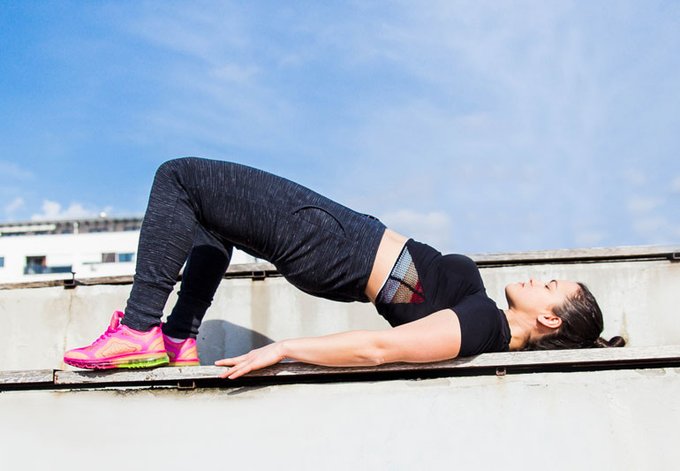
Other muscles that tend to be weak are the gluteus maximus in the buttocks, and the gluteus medius and gluteus minimus on the side of the hip. The bridge and clamshell exercises can help strengthen these muscles.

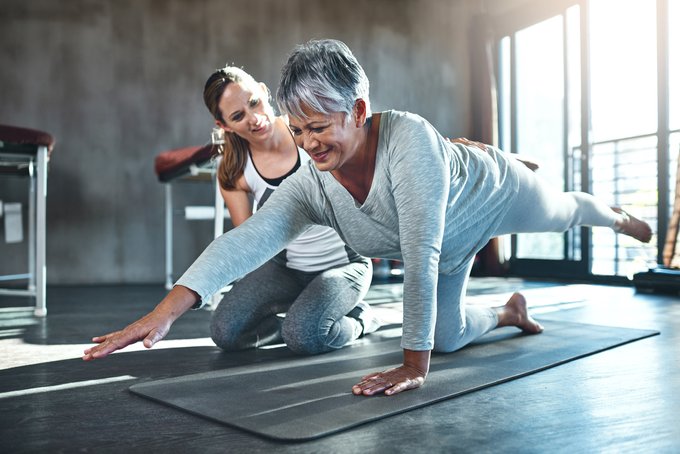
Smith emphasizes that getting the proper position of these exercises correct is more important than the number of repetitions you do. “It’s better to take your time, maybe do fewer reps, but with better quality,” she says. For that reason, it can be helpful to have the guidance of a physical therapist to get started.

Move on from the core

Core exercises are the starting point of overall fitness because you need to hold those muscles engaged while you strengthen other muscles, such as the biceps in the arms or the quadriceps in the legs.

Smith suggests setting short-term goals (for about a month) and then more long-term goals. Once you have achieved short-term goals, such as getting around more easily, add other types of weight-training or resistance exercises to build muscle elsewhere.

With any exercise you do, always listen to your body, warns Smith. If you have pain other than muscle burn, take it easy. Reduce the number of repetitions, the weight or the duration of the exercises. Then build up gradually. “You don’t have to be in pain to make gains,” she says.

Beginner exercises for core strength

For each of the following, work up to one to two sets of 10 to 15 repetitions once a day.

Abdominal bracing

Lie on your back with your knees bent and feet flat on the floor. Contract your abdominal muscles, and press the arch of your back down toward the floor, pulling your belly button toward your spine. Hold for 5 to 10 seconds. Make sure your lower back stays flat on the floor. Relax and repeat.

Bridge

Lie on your back with your knees bent and feet flat on the floor with your arms at your sides. Squeeze your abdominal and buttocks muscles, push your heels into the floor and slowly lift your buttocks and hips off the floor. Keep your back straight. Hold for 5 to 10 seconds.

Clamshell

Lie on your side with knees bent in line with your hips and back, draw up the top knee while keeping contact of your feet together as shown. Don’t let your pelvis roll back during the lifting movement. Hold for 5 seconds.

https://health.clevelandclinic.org/planning-to-start-exercising-start-with-your-core-first/?utm_medium=social&utm_source=twitter&utm_campaign=cc+tweets

Dark Chocolate: The Perfect Snack for Stress Relief and Heart Health

cleve chocolate

Swimming is a remarkably effective workout @HarvardHealth


Harvard Health

@HarvardHealth
·


Swimming is a remarkably effective workout because it combines three important types of exercise in one: #aerobics, #stretching, and strengthening. https://bit.ly/3yNA0wZ #HarvardHealth #swimming

By Heidi Godman, Managing Director

Everyone likes a bargain, and lap swimming is a good deal when it comes to exercise. Swimming is a remarkably effective workout because it combines three important types of exercise in one: aerobics, stretching, and strengthening. “Simply keeping yourself afloat activates the core muscles in your back and abdomen. And you have to move all of your muscles to swim,” says Leigh de Chaves, a physical therapist and clinical supervisor of rehabilitation services at Harvard-affiliated Brigham and Women’s Hospital. (She also swam competitively in college.)

Are you a good candidate for lap swimming?

Consider lap swimming if you’re generally healthy, you’re a good swimmer, and your doctor says it’s okay. It’s no problem if you’re not a fan of the crawl: “Any stroke is fine. The breast, side, and back strokes are often favored because a lot of people don’t like putting their face in the water, like you have to do with the crawl,” de Chaves says.

However, lap swimming might be not be doable if you have an underlying condition, such as heart disease or a seizure disorder, that puts you at risk for a life-threatening event in the water. You may also need to skip lap swimming if you’re not strong enough to climb in and out of the pool easily. And you should be careful if you have injuries to your shoulders or neck. Lap swimming may increase your pain.

Start your lap swimming routine slowly

A green light for a lap swimming routine doesn’t mean you should start with 20 laps. Ease into it. “Focus on the amount of time you spend swimming, at first. For example, swim for five or 10 minutes, a few times per week. Gradually increase the amount of time each week, and note how many laps you can do within that time. Eventually, set goals to increase your speed by doing more laps in your set time, so that you can measure your progress,” de Chaves explains.

A big payoff

Once you’re in the swim of things, you’ll notice lots of benefits to lap swimming. It’s easy on the joints, thanks to buoyancy in water, and it has a meditative quality that forces you to focus on your movement and breathing.

Lap swimming also

  • improves endurance and cardiovascular health
  • helps lower blood pressure
  • increases flexibility
  • helps you control your weight
  • boosts your balance
  • reduces fall risk
  • helps sharpen thinking
  • helps reduce stress.

Some dos and don’ts for lap swimming

De Chaves points out that it’s important to warm up your muscles before diving into a lap swimming workout. All it takes is a few minutes of gentle paddling, and then static stretches of your shoulder and leg muscles.

Some other dos and don’ts:

  • Do wear nonslip shoes or sandals when walking on the pool deck.
  • Don’t forget to apply sunscreen if you’re swimming outdoors.
  • Don’t forget to stay hydrated before and after a workout.
  • Don’t skip stretching your muscles after lap swimming. You’ll want to stay flexible so you can get back in the pool.

For the nonswimmers in the pool

If you’re not a lap swimmer, you can still benefit from aquatic exercises — exercising in the shallow end of a pool. You might take a class with a trainer who leads a group through a set of exercises with special water weights or flotation devices (like a pool noodle). Or you can simply try water walking; working against the resistance of the water is good for your muscles and bones.

“If you have balance problems, it’s a good idea to exercise with a friend who can assist you. I also recommend wearing a buoyancy belt around your waist to keep you upright,” de Chaves advises.

Look for aquatic exercise classes — such as strengthening or aerobics — at the local YMCA, a fitness center, or a community center.

About the Author

photo of Heidi Godman

Heidi Godman, Managing Director

Heidi Godman directs all news gathering for Harvard Health Publishing, and also directs the curation and production of HHP’s four monthly subscription publications (the Harvard Health Letter, Harvard Heart Letter, Harvard Men’s Health Watch, and Harvard Women’s Health … See Full Bio

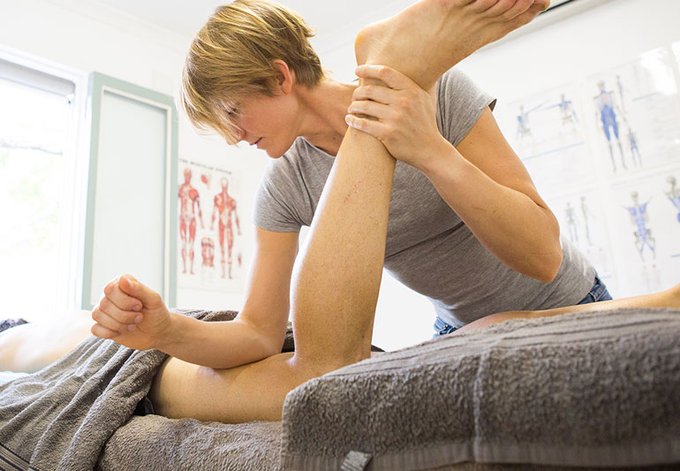
Common types of massage and their benefits: @ClevelandClinic Victoria Bodner, LMT

If you’re stressed and sore, you may think there’s nothing you can do but take some over-the-counter pain relievers and plow through your day. But licensed massage therapist, Victoria Bodner, LMT, says you don’t have to grin and bear it.

Massage is a great tool for relaxation, pain relief, easing muscle tension and more, says Bodner. Learn more about the common types of massage and their benefits.

What is massage therapy?

Performed by a licensed massage therapist, massage therapy involves using different pressures, movements and techniques to manipulate muscles and other soft tissues in the body. With a goal of slowing down your nervous system, massage therapy can be used to release stress and tension, provide relief from symptoms, heal injuries and support wellness.

Types of massage therapy

Massages come in all shapes and sizes. Here are some of the offerings you might find on a massage therapy menu.

Swedish massage

Feeling stressed? A Swedish massage is the classic go-to for major relaxation. Swedish massage is typically a full-body massage that uses a gentle touch. It’s a good pick for people new to massages. “It can help calm your nervous system. Swedish massage is also a good avenue for encouraging a relaxed emotional state of mind which can directly impact your muscles,” says Bodner.

Deep tissue massage

Your muscles can get tight from repeated use — even from something less active like sitting, driving or hunching over your laptop. “Deep tissue massage gets into your muscles and tendons to release that tightness,” Bodner says. It’s good for people with injuries, general muscle tightness and chronic muscle pain.

Sports massage

Sports massages are similar to deep-tissue massages, but they zero in on the muscles that take a beating when you play sports or do another repetitive physical activity. “Athletes and dancers use their bodies differently than the average person,” Bodner says. “A massage therapist with experience in sports massage can get in there to break up muscle tightness and address sports injuries.”

Trigger point massage

A knot in your neck or a tight spot in your back is known as a trigger point. “A trigger point is a tiny muscle spasm or tight spot in the tissue,” Bodner explains. In a trigger-point massage, the massage therapist uses focused and direct pressure to target those spots. This increases blood flow to the areas, helping them release. This type of massage can also be helpful for people with chronic pain.

Myofascial release

The fascia is a web of connective tissue under the skin. “It supports the muscles and allows us to move freely,” Bodner explains. When you get a myofascial release, your massage therapist will knead and stretch the muscles and fascia to work out tension and tightness. “It’s a form of deep stretching often used together with other therapeutic massage techniques,” she says. “It’s great for opening up tightness in your neck, shoulders and your upper and lower back.”

Lymphatic massage

Lymphatic fluid has several important functions, including maintaining fluid levels and removing waste products from the body. Lymphatic massage uses a gentle touch to help lymphatic fluid flow more freely through the body. “Lymphatic massage is great for people with inflammation — including people with illnesses like arthritis, as well as people who have had mastectomies, which often involve removing the lymph nodes,” Bodner says.

Prenatal massage

Prenatal massages are great for helping moms-to-be relax and can help address the aches and pains of growing a baby. “Prenatal massages are wonderful for taking pressure off the hips and can help with swelling in the feet and legs,” Bodner says. “And when mom is relaxed and feeling well, the baby benefits, too.”

Health benefits of massage

Massage therapy may be beneficial for anyone but has been noted to help those who various conditions like cancer, heart disease, stomach problems and fibromyalgia. You should make sure you talk to your therapist about any medical issues prior to your first session. Here are some of the benefits of massage therapy.

Reduces stress and anxiety

That feeling of calm after a massage can aid in reducing stress and anxiety, a study found. Your body has two nervous systems: a sympathetic nervous system that drives your “fight or flight” response in stressful situations and a parasympathetic nervous system that focuses on routine and day-to-day operations that lead to relaxation and rest. A massage is thought to increase your parasympathetic response, which can decrease feelings of anxiety.

Improves sleep

Getting a massage can decrease cortisol (a stress hormone) and increase levels of serotonin and dopamine, neurotransmitters known to stabilize your mood. Studies have shown that massage therapy is beneficial for those who have insomnia related to menopause and congestive heart failure.

Lessens pain and muscle tension

A variety of studies have looked into how massage may help lessen pain like acute back painneck painheadaches and knee pain. The results show that relief may be short-term, rather than long-term and in some cases receiving a 60-minute massage multiple times per week had better results than fewer or shorter massages.

Improves immune function

Can a massage boost your immune system? A study suggests that regular massages increase your body’s level of white blood cells, which work to combat viruses.

Relieves constipation

study shows that for those dealing with constipation after surgery, an abdominal massage may help with bowel movements.

Lessens fibromyalgia symptoms

From sleep, memory and mood, studies have shown that using massage over the course of five weeks may improve symptoms of fibromyalgia, a chronic illness that causes muscle and joint pain and fatigue.

Relieves cancer pain

For people undergoing cancer treatments, the physical and emotional toll is great. Many have turned to massage to help lessen cancer pain, increase relaxation and improve quality of life. There have been a variety of studies, some that say massage therapy doesn’t improve cancer pain and others that show a positive impact.

Who should try massage therapy?

Many of us can benefit from a massage — it’s a great way to improve wellness, help with pain and more. If you have a medical condition, you should check with your doctor and have a conversation with your massage therapist. For those who are pregnant, a prenatal massage can help alleviate pain and swelling.

“There are so many good reasons to see a massage therapist,” Bodner says.

Not sure what type of massage is right for you? You don’t have to zero in on the perfect massage before booking an appointment. In fact, massage therapists often mix and match techniques to address your unique concerns.

“The different types of massage aren’t exclusive from one another,” Bodner says. “A massage therapist uses a combination of techniques to help you relax, get rid of tight muscles and address other concerns.”

Muscles in your body are a use-or-lose proposition. You need to use them to keep them strong!@ClevelandClinic – Susan Williams, MD. endocrinologist

cleveland muscles

Cleveland Clinic
@ClevelandClinic

Muscles in your body are a use-or-lose proposition. You need to use them to keep them strong!

You may not realize it, but we all start losing 1 percent of muscle mass each year after age 30. That’s why your diet in later years should not look the same as it did when you were younger, says endocrinologist Susan Williams, MD.

Skipping breakfast, eating fast food and being inactive in your 20s and early 30s might not hurt your health in the short term. However, poor nutrition and lifestyle habits take their toll over time.

People who embrace good habits early on really get ahead of the game, Dr. Williams says. But it’s never too late to start eating better and taking better care of your body.

Whether you’re 30 or 50, Dr. Williams offers three important tips to get started in eating right when you are thinking about your long-term health.

RELATED: Do You Know How Much Exercise You Really Need? 

1. Keep your weight in check

A roller coaster of weight gain and loss can change your body composition and leave you with more fat mass and less lean muscle mass.

2. Eat three balanced meals a day

You also want to limit your snacks in between. The word “balanced” is especially important because eating a wide variety of foods will help you prevent nutritional deficiencies.

Dr. Williams suggests this simple shopping list:

  • Lean proteins. Choose chicken, white fish, oily fish like salmon, eggs, tuna fish and red meat (less frequently than other protein).
  • Whole grains. This includes multigrain breads, and long-cooking rice or oats.
  • Veggies. Go for fresh or fresh frozen. Choose what’s in season and enjoy a variety to get the vitamins and minerals your body needs.
  • Fruit. Fresh fruit is best, followed by frozen. Canned fruit can be OK, but choose options in light syrup or water. Check the label and avoid added sugar.
  • Dairy. Choose milk, yogurts, cheeses and cottage cheese that are low-fat or fat-free.

Steer clear of cookies, cakes, pies, ice creams, juices and rich desserts. If that sounds like no fun, Dr. Williams advises treating these foods as treats. Save them for dining out or special occasions, but don’t make them part of your daily diet.

RELATED: Which Bread Is Best For You — Whole-Grain, Multigrain or Whole Wheat?

3. Use your muscles

Eating protein and being physically active are equal partners in the quest for maximum health, Dr. Williams says. Muscles are made of protein, but simply eating protein is not enough to save them.

“Muscles in your body are a use-or-lose proposition,” she says. “You need to use them to keep them strong.”

Can’t carve out time for the gym? Try this daily routine:

  1. In the morning, stretch for 10 minutes.
  2. At lunch, eat and then walk for 10 minutes.
  3. After dinner, spend 10 minutes with stretch bands or light weights.

Even a half hour of physical activity can make a world of difference, especially if you make it a habit in your 30s. “Don’t let your weight creep up while your muscle mass creeps down over your 30s and 40s,” Dr. Williams says. The longer you wait, the harder it will be to get started — and the more muscle you will have already lost.